Showing posts with label Culture. Show all posts

Tuesday, September 21, 2021

ඇත් පංතියක් නඩත්තු කිරීම හීලෑ අලි-ඇත් ගැටලුවට විසඳුමක් ද?

අලි ඇතුන්ගේ ආගමික භාවිතය ගැන අප සමාජයේ අඛණ්ඩ විවාදයක් මෑත කාලයේ දී ඇති වී පවතී. සංස්කෘතිකමය වශයෙන් වැදගත් වන එය, අලි-ඇතුන්ට හානියක් නොමැතිව පවත්වා ගැනීම පිළිබඳව කලකට පෙර ඉදිරිපත්ව ඇති එක් යෝජනාවක් වන්නේ එවැනි අලි-ඇතුන් සමූහයක් පුද්ගලික අයිතිය යටතේ නොව, රජය විසින් පවත්වාගෙන යෑමය. එනම් "ඇත් පංතියක්" පවත්වාගැනීමය. 

හීලෑ අලි-ඇතුන් පිළිබඳ සංවාදය මතු වූ අවස්ථා කීපයක දී (වෙනස් ආණ්ඩු දෙකක් තිබිය දී) මා විසින් ලියන ලද ලිපිවලින් උපුටාගත් කොටස් කීපයක් පහත දක්වා ඇත. එමෙන්ම ආගමික කටයුතු සඳහා ලංකාවේ දී අලිඇතුන් භාවිත කිරීම පිළිබඳව ලියූ පර්යේෂණ ලිපියක සාරාංශයක් හා ඊට අදාළ සබැඳිය ද මෙහි ඇතුළත් කර ඇත. 


හීලෑ අලි ප්‍රශ්නයට විසඳුම් සෙවීම

සම්පූර්ණ ලිපිය - අපේ රටේ අලි ඇතුන් ගේ අනාගතය (විදුසර 2011.08.10)

සබැඳි: 
(2) Vidusara: http://www.vidusara.com/2011/08/10/feature1.html

හීලෑ අලි-ඇතුන් ශ්‍රී ලංකාවේ සංස්‌කෘතියේ වැදගත් අංගයක්‌ බව පෙනේ. හස්‌තියා මංගල සම්මත සංකේතයක්‌ සේ සලකන ලදි. අතීතයේ සැලකිය යුතු කලක පටන් අලි ඇතුන් විවිධ කටයුතු සඳහා භාවිත කර තිබේ. සංග්‍රාම හස්‌තීන් ලෙස, රාජකීය සත්ත්වයකු ලෙස, ප්‍රවාහන මාධ්‍යයක්‌ ලෙස, බර වැඩ සඳහා හා වෙළෙඳ ද්‍රව්‍යයක්‌ ආදි වශයෙන් විවිධ කාර්යයන් සඳහා යොදාගෙන තිබේ. එය කලින් කලට වෙනස්‌ වී තිබේ.

මේ වන විට අලි ඇතුන් මූලික වශයෙන් යොදා ගැනෙන්නේ බර වැඩ, සංචාරක කර්මාන්තය හා පෙරහැර වැනි ආගමික අංග සඳහා බව පෙනේ. සැලකිය යුතු කාලයක සිට පෙරහැර සඳහා අලි යොදා ගැනීම නිසා අලි ඇතුන් නැති පෙරහැරක්‌ සඳහා අදටත් සමාජයේ ඇත්තේ අඩු ආකර්ෂණයකි. එසේ ම හීලෑ අලින් නැරඹීමට බොහෝ දෙනා දක්‌වන්නේ ද දැඩි ඇල්මකි. පාරේ තොටේ හෝ වෙනත් තැනක හෝ හීලෑ අලියකු - ඇතකු ගමන් කරන ආකාරය හෝ වැඩ කරන ආකාරය දුටු විට මිනිසුන් අතර ඇති වන උනන්දුව මීට සාධකයකි.

අපේ රටේ සැලකිය යුතු කාලයක පටන් හීලෑ අලින් හිඟයක්‌ ඇති වෙමින් තිබේ. ඒ අලින් ඇල්ලීම තහනම් වූ කාලයේ පටන් අලි ඇතුන් අල්ලාගැනීම අපහසු වූ නිසා ය. සැම වර්ෂයක දී ම මෙන් මේ වර්ෂයේ දී පෙරහැර සමයේ මේ අලි ඇතුන් ගේ හිඟය ගැන අසන්නට ලැබේ. මේ වන විට හීලෑ අලි ඇතුන් ගණන සියයක්‌ තරම් අඩු බව පැවසේ. කෙසේ වෙතත් පොදුවේ පවසන්නේ (නො කියා කියන්නේ) හීලෑ කිරීම සඳහා අලි ඇතුන් අවශ්‍ය බව ය. මේ ඉල්ලීම්වලට කඩිනම් ප්‍රතිචාර දක්‌වන බවක්‌ ද දැන් දැන් පෙනෙන්ට තිබේ. වනජීවී අමාත්‍යවරයා ගේ ප්‍රකාශයකට අනුව අලින් හා ඇත් පැටවුන් 300ක්‌ පමණ විහාරස්‌ථානවලට ලබා දීමට පියවර ගන්නා බවක්‌ පුවත්පත්වල පළ විය. මෙය සිදු විය යුතු දෙයක්‌ නම් නො වේ.

පෙරහැර වැනි සංස්‌කෘතික අංග සඳහා හීලෑ අලින් අවශ්‍ය ම නම් මේ ගැටලූවට සාධාරණ විසඳුමක්‌ තිබේ ද? මෙවැනි විසඳුමක්‌ කලකට පෙර මාධ්‍ය තුළින් යෝජනා කළ බවක්‌ අපට මතක ය. ඒ අනුව හීලෑ අලි ගහනයක්‌ පවත්වා ගැනීම රජයෙන් සිදු කළ යුතු ය. (දැනටමත් එවැනි ගහනයක්‌ පින්නවල වාසය කරයි). පෙරහැර වැනි විවිධ සංස්‌කෘතික අංග සඳහා අලින් අවශ්‍ය නම් ඒ සඳහා පුහුණු කළ අලි ඇතුන් ලබා දිය හැකි ය. එය අලූතෙන් පිහිටුවන රජයේ ආයතනයක්‌ මගින් සිදු කළ හැකි ය. එක ම කාලයක පෙරහැර ගණනාවක්‌ නො පවත්වන බැවින් මෙවැනි ආයතනයකට එතරම් අලි ඇතුන් ප්‍රමාණයක්‌ අවශ්‍ය වන්නේ ද නැත. එවිට පෞද්ගලික අයිතියක්‌ පිළිබඳ ගැටලූවක්‌ පැන නො නඟී. අපේ රටේ ඉතිහාසයේ වැඩි කාලයක්‌ අලි ඇතුන් රටේ පාලකයාට අයත් ව තිබූ බව පෙනේ. (ඇතැම් කාලවකවානුවල දී අලින් පෞද්ගලික අයිතිය යටතේ පැවැති බව ද ඓතිහාසික සත්‍යයකි). අලින් ගේ යහපත සලකා රජයේ හෙවත් පොදු අයිතිය වෙත යළිත් යොමු වීම මගින් ම මේ ගැටලූව විසඳාගත නොහැකි ය.

හීලෑ අලින් අතරින් නව ජනිතයන් බිහි වීමක්‌ නො වන්නේ ද මේ ආකාරයෙන් අධික ලෙස සේවයේ යෙදවීම නිසා බව පෙනේ. මේ අලින් අතරින් සැලකිය යුතු පිරිසක්‌ වියපත් වූවන් වුවත් ඒ අලින් හා ගැහැනු සතුන් තරුණ කාලයේ දී පවා අභිජනනය කිරීම සඳහා අවස්‌ථාවක්‌ නො ලැබුණු තරම් ය. එහෙත් එය ප්‍රායෝගිකව කළ හැකි ය. මේ දක්‌වා පින්නවල දී අලි පැටවුන් හැටක්‌ පමණ පිරිසක්‌ උපත ලබා ඇත. පෙර සඳහන් කළ ආකාරයට අලි ඇතුන් එක්‌ තැනක රැඳවීම මගින් හා පෙරහැර වැනි අවශ්‍යතා සඳහා පමණක්‌ ලබා දීම මගින් හීලෑ අලින් ගේ අභිජනනයට ද අවස්‌ථාවක්‌ ලැබේ.


කෙසේ වෙතත් කරුණු විමසා බලන විට පෙනෙන්නේ හීලෑ අලින් සඳහා ඇති ඉල්ලූමට තවත් හේතුවක්‌ ඇති බව ය. ඒ අලින් යනු මුදල් ඉපැයිය හැකි ආදායම් මාර්ගයක්‌ වීම ය. අලින් විශාල වශයෙන් සංචාරක කර්මාන්තය සඳහා යොදාගෙන තිබේ. ඒ සංචාරකයන් සඳහා ප්‍රවාහන මාධ්‍යයක්‌ ලෙස හා සංචාරකයන් පිනවිය හැකි මාධ්‍යයක්‌ ලෙස ය. හබරණ ප්‍රදේශය මේ සඳහා වඩාත් ප්‍රකට ය. එය අලි හිමියා හට ආදායම් මාර්ගයක්‌ වුවත් ඒ අලින් ගේ සාමාන්‍ය ජීවන අවශ්‍යතා පිළිබඳව නිසි සැලකිල්ලක්‌ මෙහි දී නො ලැබෙන බව පෙනේ. එය මේ අලි ඇතුන් ගේ ජීවිතවලට කළ හැකි අනිසි බලපෑම ගැන අවධානය අඩු ය.

අනෙක්‌ අතට අලි ඇතුන් පෞද්ගලිකව හිමි කරගනිමින් තම වංශවත් බව හෝ සමාජ තත්ත්වය හෝ පෙන්වීමට ද ඇතැම් පිරිස්‌ කැමැත්ත දක්‌වති. එහෙත් එය මේ සත්ත්වයාට සිදු කරන යම් නිගරුවකි. මේ අදහස අපේ සමාජයෙන් ඈත් කිරීමට කාලය එළැඹ තිබේ. අලින්ට ඇති අධික ඉල්ලූම නිසා හොර රහසේ වනාන්තරවලින් අලි පැටවුන් අල්ලා ගැනීම මෙන්ම රජයේ ආයතනවල සිටින අලින් ලබා ගැනීමට විවිධ පිරිස්‌ දක්‌වන උනන්දුව පිළිබඳ වාර්තා විටින් විට මාධ්‍ය තුළින් අසන්නට දකින්නට ලැබේ. මෙය වහා වැළැක්‌විය යුතු තත්ත්වයකි.


**********************************************

Finding a solution

Full article - Deep-rooted jumbo culture of Sri Lanka (The Nation (Insight), 23.08.2015)

Link:

The cultural links between humans and elephants in perahera processions are strong as evident in historical sources mentioned in above mentioned references. The use of tame elephants in Peraheras is given so much importance even at present. Hence, finding a sustainable method to ensure the use of elephants for cultural purposes while reducing the suffering of animals and ensuring their welfare is a need of the day.

These tamed elephants are usually kept chained with iron chains and caretakers are often blamed for handling these animals in a cruel manner. Chaining elephants can cause serious leg injuries to these animals, especially to the calves. This can be solved by finding alternatives to chaining like using proper roping as in the past.

Some of these animals are engaged in hard work during other times of the year – the lifting of logs and recently used in safari rides etc. Both these activities can cause the animal to suffer from physical disorders – safaris can cause serious bone injuries to the animal. This is because during the safari animals are overcrowded with tourists. With regard to such activities, elephants are used without a rest. This type of usage of elephants clearly goes against the guidelines specified in using these animals in safaris.

The ownership of private elephants brings the opportunity for the owners to earn money. They tend to generate more and more money from the elephants disregarding their welfare. This is a reason why elephants are seen engaging in safari rides. When these animals are free from routine functions owners use them for activities which can make them rich. The new rich seem to follow this trend, as opposed to the elites of the past who thought having an elephant enhanced individual status of their respective clans. Hence efforts to find humane ways of keeping elephants in custody should be looked into.

One such solution, as pointed out some time back, is to maintain a reserve of elephants by a dedicated state body solely for religious and other cultural purposes. Properly trained mahouts should be engaged in the service of these centres. Traditional methods as well as modern scientific methods can be tried out at such places. There could be more than one centre in the country. These centres could also serve as tourist attractions. The elephants owned by the temples can be kept in these centres.


**********************************************


හීලෑ අලින් අවශ්‍ය කුමකට ද?

සම්පූර්ණ ලිපිය - අලි-මිනිස්‌ ගැටුම වැළැක්‌වීමට අලින් අල්ලා විකිණීම විසඳුමක්‌ ද? (විදුසර, 2017.09.20)

සබැඳිය - 
(1) My Blog: http://dhaneshw.blogspot.com/2017/09/human-elephant-conflict-mitigation.html
(2) Vidusara: http://www.vidusara.com/2017/09/20/feature3.html

අලි-මිනිස්‌ ගැටුමට විසඳුම් ලෙස ඉදිරිපත් වන යෝජනාව අතරට අලින් අල්ලා විකිණීම නම් ඇතුළත් විය යුතු යෑයි ක්‌ෂේත්‍රයේ කිසිදු විද්වතකු පවසනු ඇතැයි අප සිතන්නේ නැත. ඉන් පළමු කරුණ වන්නේ අලින් අද අවශ්‍ය වන්නේ කුමක්‌ සඳහා ද යන්නයි. සත්වෝද්‍යානවල ප්‍රදර්ශනය සඳහා විදේශ රටවලට යෑවූ අලින් පත් ව ඇති ඉරණම විදේශීය මාධ්‍ය ඔස්‌සේ වාර්තා වේ.

සාම්ප්‍රදායික දැනුමක්‌ ලෙස සැලකිය හැකි අලි හීලෑ කිරීම පිළිබඳ මෙරට ඉතිහාසය බොහෝ පැරැණි ය. එහෙත් අද වන විට හීලෑ අලින් අවශ්‍ය වන්නා වූ ප්‍රධානතම කාර්යය වන්නේ සංස්‌කෘතික වශයෙන් වැදගත්කමක්‌ ඇති පෙරහැර පමණකි. ඇතැමුන් ඊට විරුද්ධ වුව ද පෙරහැර යනු අනාදිමත් කාලයක සිට පැවත එන සංස්‌කෘතික අංගයකි. මෙය බුදුදහම මෙරටට හඳුන්වා දුන් කාලයේ සිට පැවත එන්නක්‌ බව මහාවංසය අනුව පෙනේ. නිදසුනක්‌ ලෙස ගත හොත් මෙරට පළමු ස්‌තූපය වන ථූපාරාමය නිර්මාණය කළ අවස්‌ථාවේ දී එහි තැන්පත් කිරීම සඳහා ධාතූන් වහන්සේලා තැන්පත් කිරීම සඳහා සංවිධානය කරන ලද පෙරහැරේ දී ධාතූන් වහන්සේලා වැඩමවීම සඳහා ඇතකු යොදාගැනීම මීට නිදසුනකි.

කෙසේ වෙතත් පෙරහැර සඳහා අලින් ලබාගැනීම සඳහා වුව ද පෞද්ගලික අයිතියට ලබා දීම ප්‍රවර්ධනය කිරීම නො කළ යුතු බව අප ගේ අදහසයි. ඉහත කී ආකාරයට පෙරහැර සඳහා අලි ඇතුන් සැපයීම රාජ්‍ය අංශයේ මැදිහත් වීමෙන් සිදු කළ හැකි ය. එවැන්නක්‌ සඳහා යම් ආරම්භයක්‌ පසුගිය දිනක පැවැත්වුණු බවක්‌ වාර්තා විය. එය යම් ආකාරයකින් සතුටට හේතු වන කරුණකි.

පෞද්ගලික අයිතිය ප්‍රවර්ධනය නො කළ යුතු යෑයි අප සඳහන් කරන්නේ එමගින් අලින් යොදාගෙන මුදල් ඉපැයීම අරමුණු කරගත් නව ධනපති පංතිය නිසා අලින් පත් ව ඇති අසරණ තත්ත්වය අද අප ගේ ඇස්‌ හමුවේ දිස්‌ වන නිසා ය. මෙරට තුළ අලින් යොදාගෙන වැඩ ගැනීම දැන් අවම මට්‌ටමකට පත් ව තිබේ. එය තවදුරටත් අඩු වෙමින් පවතින්නකි. සෆාරි සඳහා යොදාගැනීම අලින් පත් විය හැකි දරුණුතම තත්ත්වයක්‌ වන්නේ එය හුදෙක්‌ මුදල් අරමුණු කරගෙන කරන්නක්‌ බව පෙනෙන නිසා ය. සංචාරක අධිකාරීන් ඒ සඳහා නිකුත් කර ඇති මාර්ගෝපදේශ හා මේ වන විට සෆාරි කාර්යයේ යොදාගන්නා අලින් සම්බන්ධව ක්‍රියාත්මක නො වන බව ක්‌ෂේත්‍රයට සමීප පිරිස්‌වල මතය වේ. අලින් ගේ සුබසාධනය සම්බන්ධව මේ පිරිස්‌වල අවධානය අවම ය. මේ නිසා පෞද්ගලික අයිතියට අලින් ලබා දීම නො කිරීම වඩාත් හොඳ ය.


**********************************************

අතිරේක කියැවීම සදහා පහත දක්වා ඇත්තේ පැරණි ලංකාවේ අලි ඇත්න් ආගමික භාවිතය ගැන රචනා කරන ලද පර්යේෂණ ලිපියක සාරාංශයකි. සම්පූර්ණ ලිපිය සබැඳියෙන් බාගත හැකිය.
 

Religious Use of Elephants in Ancient Sri Lanka


Citation: Wisumperuma, D. 2012, Religious Use of Elephants in Ancient Sri Lanka, Gajah, 37, pp. 16-21.


Abstract

The religious use of elephants in Sri Lanka has its origins in the early period of Buddhism in Sri Lanka. The oldest record of the use of elephants in Buddhist religious processions and festivals in Sri Lanka dates back to 3rd century BCE, when Buddhism was introduced to the Island. The oldest record of the use of elephants to draw a chariot with the Tooth Relic in a procession is from early 14th century CE, centuries prior to the commencement of the Kandy Esala Perahera in the 18th century. Elephants used for religious purposes during the early periods were mostly state elephants belonging to the king and in some cases the royal or Mangala elephant. However, a number of elephants were used in religious festivals later and that perhaps required more elephants from other sources. The first recorded donation of an elephant to a temple took place in the early 1st century CE. This could be a continuation of a former tradition. Offering of elephants to temples are frequently mentioned in historical sources since 14th century CE.

Thursday, December 19, 2019

මේ ‌කොයි යන්නේ? (බස් කතා 12 )

දිනය - 2019 ‌දෙසැම්බර් මාසෙ 17

නුගේගොඩින් පිටත්වන 689 බසයකට මං හවස නැග්ගෙ ‌දෙල්කඳ පරණ ‌පොළ ළගින්. බස් එක පරක්කු ‌වෙලා ආපු නිසා සෑහෙන ‌සෙනඟක් පිරිලා හිටියා. මං යන්තම් ඉදිරි ‌දොර‌ෙන් ඇතුළට ගිහින් දකුණු පැත්තෙ ‌දෙවැනි අසුන‌ෙ‌ ඇන්ඳ‌ෙ‌න් අල්ලා ගත්තා. ‌

එතැන සිට බස් නැවතුම්පොළක් පහු වුනාට පස්සෙ උඩහමුල්ල සුසාන භූමිය හමුවෙනවා. ඒ කිට්ටුවදි බසයේ‌ වේගය අඩු වුනා. ඒ ඉදිරියෙන් ගිය අවමගුල් ‌පෙරහැරක් නිසා. සුසානභූමියේ ‌ගේට්ටුව ළඟ අවමඟුල් රථය නවතා තිබුණා - ‌දේහය සහිත ‌‌පෙට්ටිය ඉවතට ගැනීමට සූදානමින් (‌මොකද උඩහමුල්ල දුම්රියපොළ පාරෙන් සුසාන භූමියට වාහන ඇතළු කරන්න බෑ, පඩි‌ෙපෙළක් තියෙන නිසා). බසය එය පසුකරද්දි මා අසළ අසුනේ හිඳ සිටි මැදිවයස් කාන්තාව නැගිට ගරු කළා. එහෙත් මට ‌පෙනුණු මානයේ හිඳ සිටි 10-12 ‌දෙනා අතරින් නැගිට මිය ගිය මිනිසාට ගරු කළේ ඈ පමණමයි. අනිත් හැමෝම ජනේලයෙන් එය දුටුවා. මම ‌මොහොතකට තිගැස්සුනේ මිනිසුන්ට ‌මේ සිරිත් දැන් අමතකද කියා හිතලා. අපි පාසල් ගිය කාලෙදි බසයක යන විට ‌අවමඟුල් රථයක් දුටුවාම සියලුු ‌දෙනාම වගෙ නැගිටපු සිදුවීම් මට මතක් උනා. අපි ඒ සිරිත ඉ‌ගෙන ගත්තෙ ඒ අයුරින්. කිසිව‌ෙක් කියා දීලා ‌නෙමෙයි.

ඒ අතර‌ෙ ‌කොන්දොස්තර ඉදිරි ‌දොරෙන් බසයට නැග්ගා. ඔහු ශබ්ද නගා ‌මෙහෙම කීවා - ‌"මේ අක්කට ඉඳගන්න ‌දෙන්න කවුරුවත් නැද්ද" කියලා. එවිට තමයි මම දුටුවේ මා සිටි තැනට පිටුපසින් අනෙක් පැත්තේ අසුනක් අල්ලාග‌ෙන සිටගෙන සිටි‌යේ ගැබිණි කාන්තාවක් බව. ඇය මා බසයට නගින විටත් බසයට නැග සිටි ‌කෙනෙක්. බස් නැවතුම්‌පොළ තුනක් පමණ පසුකර යනතුරුත් ඇය සිටගෙනමයි! ගැබිණි කාන්තාවන් සඳහා ‌වෙන් කළ අසුන කිට්ටුව සිටගෙන සිටි ඇයට අසුනක් දීමට ‌කෙනෙක් නැහැ... අන්තිමට මම ‌පෙර සඳහන් කළ, අනෙක් පස අසුනක හිඳ සිටි මැදිවියේ කාන්තාව ඇගේ අසුන ඒ ගැබිණි කාන්තාවට දුන්නා. ‌ෙසෙනඟ සිටි නිසා ඇය ඊට කලින් ගැබිණි කාන්තාව දැක නැති බව මට ‌තේරුණා.

අප මේ ‌කොහිද යන්නේ කියලා මට හිතුනා. මනුස්සකම ‌කොහි ගිහින්ද? ඒ බස‌යේ අසුන්ගෙන සිටි අය අතරින් මනුස්සයො හිටියෙ එක්කෙනයිද? අපේ උදව් අවශ්‍ය ජීවත්වන ‌කෙනෙකුට උදව් ‌නොකරන අය මිය ගිය අයෙකුට ගරු කරාවිද?

මං හිතනවා ‌මෙවැනි අවස්ථාවල ඔබේ අත්දැකීම් මීට වඩා යහපත් ඒවා කියලා. මගේ පැතුමද එයයි.


ධනේෂ් විසුම්පෙරුම

Tuesday, April 12, 2016

සැබෑ ලෝකයේ මිතුරු ඇසුර ඉක්‌මවා නො යන ෆේස්‌බුක්‌ මිතුරු ඇසුර

ධනේෂ් විසුම්පෙරුම

විදුසර, පි. 5, 08.04.2016

Vidusara - "Facebook friends do not exceed real world friends"

http://www.vidusara.com/2016/04/06/feature1.html


මීට මාස කිහිපයකට පෙර අප දන්නා වැඩිහිටි වෘත්තිකයෙක්‌ මිය ගියේ ය. ඔහු ජාත්‍යන්තර වශයෙන් ප්‍රකට ව සිටි අයෙකි. ඉන් මාස දෙකකට පමණ පසු එළැඹුණු ඔහු ගේ උපන් දිනය වෙනුවෙන් ඔහු ගේ ෆේස්‌බුක්‌ තීරයේ මිතුරන් කිහිප දෙනකු සුබපැතුම් පළ කර ඇති ආකාරය දැකිය හැකි විය. එය ඔහු ගේ සමස්‌ත ෆේස්‌බුක්‌ මිතුරු මිතුරියන් සුළු පිරිසක්‌ වුවත්, එය වැදගත් වන්නේ ඔහු මිය ගිය පුවත නො දන්නා ෆේස්‌බුක්‌ මිතුරන් ද සිටි බවට මෙය සාධකයක්‌ වීම නිසා ය. ෆේස්‌බුක්‌ යොදාගනු ලබන මූලික අරමුණ වන්නේ අපේ මිතුරු මිතුරියන් හා කඩිනමින් සම්බන්ධතා පවත්වාගැනීම හා අපේ අදහස්‌ අපට සමීප පිරිස්‌ වෙත යොමු කිරීම ය. (අපේ රටේ ඇතැම් දේශපාලනඥයන් නො දන්නා නමුත්, මීට දේශපාලන අදහස්‌ ද ඇතුළත් විය හැකි ය). එහෙත් පෙර කී නිදසුනෙන් පෙනෙන්නේ යම් අයකු ගේ ෆේස්‌බුක්‌ මිතුරු ලැයිස්‌තුව දිගු වුව ද, ඔහු ගේ ෆේස්‌බුක්‌ පැතිකඩ (profile) හා විස්‌තර ඔහු ගේ මිතුරක්‌ සියලු දෙනා ම නො බලන බවයි.

මෙය ෆේස්‌බුක්‌ මිතුරන් අතර පමණක්‌ නො ව අපේ සාමාන්‍ය ජීවිතයේ සැබෑ ලෝකයේ මිතුරු-මිතුරියන් සඳහා ද පොදු වූ කරුණකි. අපට කෙතරම් මිතුරු මිතුරියන් සිටිය ද, අප හා සමීප ව ඇසුරු කරන්නේ ඉන් සීමා සහිත පිරිසක්‌ පමණි. කෙසේ වෙතත් බොහෝ දෙනා සිතන පරිදි සැබෑ ජීවිතයේ මිතුරනට වඩා වැඩි පිරිසක්‌ සමග සම්බන්ධතා පැවැත්වීමට ෆේස්‌බුක්‌ වැනි සමාජ ජාල ඔස්‌සේ හැකියාවක්‌ තිබේ. ඒ අඩු කාලයක්‌ තුළ අපේ තොරතුරු වැඩි පිරිසක්‌ වෙත යොමු කළ හැකි නිසා ය. ඇතැමුන් සමාජ ජාල පරිහරණය සඳහා යොමු වීමේ අරමුණ වන්නේ ද මේ කරුණයි. වෙනත් ආකාරයකින් පවසන්නේ නම්, වැඩි මිතුරු පිරිසක්‌ ඇති කරගැනීම හා පහසුවෙන් මිතුරු සම්බන්ධතා පවත්වාගැනීමයි (වෙනත් අරමුණු ඇති පිරිස්‌ ද නැතිවා නො වේ). එහෙත් පසුගිය ජනවාරි මාසයේ දී ප්‍රකාශයට පත් වූ එක්‌ පර්යේෂණ පත්‍රිකාවකට අනුව, ෆේස්‌බුක්‌ භාවිතයෙන් ඇති කරගත හැකි මිතුරු මිතුරියන් ගණනට ද සීමාවක්‌ තිබේ.

සැබෑ ලෝකයේ මිතුරන් ගණන සීමාසහිත ඇයි?


පළමුව සැබෑ ජීවිතයේ දී අප ඇසුරු කරන මිතුරු මිතුරියන් ගණන සීමා සහිත වන ආකාරය ම`දක්‌ විමසා බලමු. කාලයෙන් කාලයට අප ඇසුරු කරන මිතුරන් වෙනස්‌ වේ. අප පාසල් ගිය කාලයේ මිතුරන් අතරින් අද වන විට තරමක්‌ හෝ සමීප ව ආශ්‍රය කරන්නේ ඉතා සුළු පිරිසකි. සරසවියෙන් පිට වූ පසු සරසවි මිතුරන් අපෙන් ඈත් වීම ඉතා ඉක්‌මනින් සිදු වේ. වැඩිහිටියන් ගේ මිතුරන් වන්නේ සේවා ස්‌ථානයේ අය හා අසල්වැසියන් ය. "සුළෙ`ග් ලෙලෙනා මල් සේ ද`ග පා - අප පාසල් ගිය කාලයේ - යාළුවො අද නැත- වෙන අය එහි ඇත - කාලය මැවු වෙනසක අරුමේ" යන සුප්‍රකට ගීතයෙන් කියෑවෙන්නේ ද මේ යථාර්ථයයි.

කෙසේ වෙතත් එසේ අපේ මිතුරු මිතුරියන් ගණන සීමා වන්නේ කුමක්‌ නිසා ද යන්න අපට ඇතැම් විට නො සිතෙන කරුණකි. මිනිසුන් ගේ මොළය සතු ප්‍රජානන හැකියාව අනුව බහුවිධ සම්බන්ධතා සැකසීමට අප ගේ මොළයට ඇති හැකියාව සීමා වේ. නිදසුනක්‌ ලෙස ගත හොත් එක්‌ වරක දී අපට කතා කළ හැකි මිතුරන් ගණන සීමා සහිත ය. මේ අනුව මිතුරු සම්බන්ධකම් පවත්වාගෙන ගිය හැකි ස්‌වාභාවික කණ්‌ඩායමේ ප්‍රමාණය මිනිසුන් සඳහා 100-200 අතර වේ. එහි සාමාන්‍යය 150ක්‌ සේ සැලකිය හැකි ය. මේ කල්පිතය සමාජ- මස්‌තිෂ්ක කල්පිතය (social brain hypothesis) නම් වන අතර මේ ප්‍රමාණය ඇතැම් විට ඩන්බාර් ගේ අංකය (Dunbar's number) ලෙස හඳුන්වනු ලබන්නේ එය ඉදිරිපත් කළ මහාචාර්ය රොබින් ඩන්බාර් ගේ නමිනි (ඔහු අප මාතෘකා කරගත් අධ්‍යයනයේ කතුවරයා ද වෙයි). ප්‍රයිමේටාවන් ගේ මොළයේ ප්‍රමාණය හා සමාජ කණ්‌ඩායම් පිළිබඳව අධ්‍යයනය කිරීමෙන් පසුව ඔහු එය ඉදිරිපත් කර ඇත. අද වන විට ද දඩයමේ යෙදෙන මානව කණ්‌ඩායම්වල සාමාජිකත්වය මෙවැනි අගයකට සීමා වේ. එසේ ම මේ සම්බන්ධතා පවත්වාගෙන යැම තවදුරටත් සීමා කරනු ලබන්නේ ඒ සඳහා යෙදවිය හැකි කාලය සීමා වීම ම`ගිනි. අපට අපේ සමාජ සම්බන්ධතා පවත්වාගෙන යැම සඳහා යොදාගත හැකි කාලය සීමා වේ. මෙය ස්‌වාභාවිකව සිදු වන්නකි. මෙය අදාළ මිත්‍රත්ව පවත්වාගැනීම සඳහා අපට ඇති කාලය මත තවදුරටත් සීමා වේ.

ෆේස්‌බුක්‌ මිතුරන් ගණන සිතන තරම් ඉහළ නැහැ


ෆේස්‌බුක්‌ මිතුරන් පිළිබඳව සිදු කරන ලද, අප මාතෘකා කරගන්නා අධ්‍යයනයේ දී උත්සාහ දරා ඇත්තේ ෆේස්‌බුක්‌ වැනි සමාජ ජාල යොදාගැනීමෙන් ඉහත සඳහන් කළ බාධක ඉක්‌මවා යා හැකි වේ ද යන්න සොයා බැලීමට ය. මේ සඳහා බ්‍රිතාන්‍ය වාසීන් 3,375ක පමණ පිරිසක්‌ සම්බන්ධ කරගනිමින් සමීක්‌ෂණ දෙකක්‌ පවත්වා තිබේ.

නිතර සමාජ ජාල භාවිත කරන හා ඒ පිළිබඳව තෘප්තිමත් බවකින් යුක්‌ත වූ දෙ දහසක පමණ පිරිසක්‌ සම්බන්ධ කරගත් පළමු සමීක්‌ෂණයේ දී පෙනී ගොස්‌ තිබූ පරිදි, ෆේස්‌බුක්‌ භාවිත කරන්නකුට ඇති සාමාන්‍ය මිතුරන් ගණන ආසන්න වශයෙන් 155ක්‌ (නිශ්චිතව 155.2) පමණ වේ. මෙහි දී කාන්තාවන්ට ඇති මිතුරු මිතුරියන් ගණන පිරිමින්ට වඩා ම`දක්‌ අධික වේ. කාන්තාවන් සඳහා වන සාමාන්‍යය 165.5ක්‌ වූ අතර, පිරිමින් සඳහා එය 145ක්‌ පමණි. අනෙක්‌ සමීක්‌ෂණයට සම්බන්ධ කරගත් 1,375ක්‌ පමණ වූ පිරිසට මූලික වශයෙන් ඇතුළත් ව සිට ඇත්තේ වෘත්තිකයන් ගෙන් සැදුම්ලත් නියෑදියකි. එහි දී හෙළි වූ පරිදි ඔවුන් ගේ මිතුරන් ගණනේ සාමාන්‍යය ආසන්න වශයෙන් 183ක්‌ (නිශ්චිතව 182.8) පමණ විය. එහි දී කාත්නාවන් සඳහා 196.2ක්‌ හා පිරිමින් සඳහා 156.6ක්‌ යන අගය ලැබී තිබේ. අපේක්‌ෂා කළ හැකි ආකාරයට ම, වැඩිහිටි පරපුරේ ෆේස්‌බුක්‌ සාමාජිකයකුට වඩා වැඩි මිතුරන් ප්‍රමාණයක්‌ තරුණයකුට සිටියි.

මේ කියන මිතුරු-මිතුරියන් ගණන සැබෑ ලෝකයේ මිතුරු-මිතුරියන් ප්‍රමාණය පිළිබඳ ඉහත කී සීමාව වන 150 (100-200ක පරාසය) හා මනාව ගැලපේ. ඒ අනුව, සැබෑ ලෝකයේ දී ආශ්‍රය කළ හැකි මිතුරු මිතුරියන් ගණනට වඩා විශාල මිතුරු මිතුරියන් ප්‍රමාණයක්‌ ඇසුරු කිරීමට අවස්‌ථාවක්‌ ෆේස්‌බුක්‌ වැනි සමාජ ජාලවලින් ද අවස්‌ථාවක්‌ නො ලැබේ. මේ අනුව ෆේස්‌බුක්‌ යනු මූලික වශයෙන් දන්නා හඳුනන අය ගෙන් (acquaintances) සමන්විත වූ ජාලයක්‌ මිස සමීප හිතවතුන් ගේ ජාලයක්‌ නො වේ. එසේ ම සැබෑ ලෝකයේ අප ඇසුරු කරන මිතුරන් ගණන සීමා කිරීමට බලපාන සාධක ෆේස්‌බුක්‌ වැනි සමාජ ජාලාවල මිතුරු ඇසුරේ ප්‍රමාණය සීමා කිරීම සඳහා ද බලපාන බව පැහැදිලි ය. මේ බව උක්‌ත සමීක්‌ෂණවල දී මනාව පෙනී ගොස්‌ තිබේ.

ෆේස්‌බුක්‌ ජාලයේ සමීප මිතුරන් අඩුයි


මේ සමීක්‌ෂණයේ දී හෙළි වී ඇති ආකාරයට ෆේස්‌බුක්‌ සාමාජිකයකුට කෙතරම් මිතුරන් සංඛ්‍යාවක්‌ සිටිය ද ඒ අතරින් නියම මිතුරන් (genuine friends) සේ සලකනු ලබන්නේ 27.6%ක්‌ තරම් ප්‍රමාණයකි. එමෙන් ම කිසියම් ආපදාවක්‌ හෝ හදිසි අවස්‌ථාවක දී මානසික හෝ සමාජයීය සහායයක්‌ ලබාගැනීම සඳහා යොමු වන්නේ 4 දෙනකු තරම් වූ කුඩා මිතුරන් ගණනක්‌ වෙත ය. අනෙක්‌ අතට සහනයක්‌ හෝ අනුකම්පාවක්‌ හෝ ලබාගැනීමට අපේක්‌ෂා කරන්නේ 14ක්‌ පමණ වූ මිතුරන් පිරිසක ගෙන් (සමීප මිතුරන්) පමණි. මෙය සැබෑ ලෝකයේ මිතුරු ඇසුරේ දී අප සහාය හා සහනය අපේක්‌ෂාවෙන් සමීප වන මිතුරන් ගේ ගණන හා බෙහෙවින් සමාන බව පෙනේ.

ෆේස්‌බුක්‌ මිතුරන් ලෙස විශාල පිරිසක්‌ වෙන් වුව ද ඒ තුළ මෙවැනි තත්ත්වයක්‌ ඇති වන්නට එක්‌ හේතුවක්‌ වන්නේ සැබෑ ලෝකයේ දී අපට සමීප මිතුරන් හා දන්නා හඳුනන අය හෙවත් දුරස්‌ථ මිතුරන් (acquaintances) සිටිය ද ෆේස්‌බුක්‌ සමාජ ජාලයේ දී මෙය එකක්‌ සේ සැලකීම ය.

මේ අනුව සිය ගණන් ෆේස්‌බුක්‌ මිතුරන් සිටි පමණින් තමන්ට විශාල මිතුරු ජාලයක්‌ පවත්වාගෙන යා හැකි යෑයි සිතීම එක්‌තරා ආකාරයකට විහිළුවක්‌ බව මේ පර්යේෂකයා ගේ මතයයි. කෙසේ වෙතත් කාලයත් සමග තම මිත්‍රත්වයන් දියාරු වී වියෑකී යැමේ වේගය අඩු කිරීම සඳහා ෆේස්‌බුක්‌ ජාලය උපකාරී වන බව සත්‍යයකි. එහෙත් කාලයත් සම`ග ඕනෑ ම මිතුරකු දන්නා හඳුනන අයකු බවට පත් වීම වැළැක්‌වීම සඳහා ෆේස්‌බුක්‌ හෝ වෙනත් සමාජ ජාලයකට හැකියාවක්‌ නොමැත. එසේ වීම වැළැක්‌වීමට නම්, අප අපේ මිතුරු- මිතුරියන් කලින් කල සැබෑ ලෝකයේ දී මුහුණට මුහුණ මුණගැසීම අත්‍යවශ්‍ය වේ.

මේ අනුව සමීප සම්බන්ධකම් ඇති මිතුරන් හමු වන්නේ සැබෑ ලෝකයේ සාම්ප්‍රදායික ක්‍රමයට මුහුණට මුහුණ හමු වන මිත්‍රත්වයක දී පමණක්‌ බව මේ අධ්‍යයනයෙන් පෙනේ. මේ අනුව ෆේස්‌බුක්‌ ඔස්‌සේ මිතුරන් හා ගනුදෙනු කිරීමට අප යොදාගන්නා හුවමාරු කිරීම් (Share) හා කැමැත්ත දැක්‌වීම් (Like) වැනි ප්‍රතිචාරවලට වඩා සැබෑ ලෝකයේ මිතුරන් හා අප කරන ක්‍රියාකාරකම් වන අත්දැකීම් බෙදාගැනීම, සුහද කතාබහ හා කෑම-බීම බෙදාහදාගැනීම වැනි දේට බැඳීම් ඇති කිරීමේ හා පවත්වාගැනීමේ හැකියාවක්‌ ඇති බව පෙනේ. (මූලාශ්‍රය: Royal Society Open Science, DOI: 10.1098/rsos.150292)

http://www.vidusara.com/2016/04/06/feature1.html

Monday, August 24, 2015

Deep-rooted jumbo culture of Sri Lanka

Dhanesh Wisumperuma

The Nation (Insight), 23.08.2015

The Nation: http://nation.lk/online/2015/08/22/deep-rooted-jumbo-culture-of-sri-lanka/

My Blog (Edited): http://dhaneshw.blogspot.com/2015/08/deep-rooted-jumbo-culture-of-sri-lanka.html

This is the perahera season. Beautifully caparisoned elephants are among the best attractions of these peraheras or the Buddhist religious processions held annually in leading religious centers around the country. They carry the relic casket as well as the nilames or the chieftains in ceremonial dresses. The number of elephants in a perahera improves the ‘state’ of it among others. The elephants are featured well in almost all tourist guides as a key feature in these processions.

However, we can see that there are protests around the country against the use of elephants in these processions. This opposition is often shown against any type of taming of wild elephants. There are two major causes for this uproar – the inhumane keeping and working conditions of the tamed elephants and the illegal capturing of the young calves reported recently. Some critics have gone so far as to demand a stop to taming of elephants all together.

It’s apparent that this resistance arises from not being rooted in one’s culture, particularly Sinhala culture. Other vested interests cannot be totally ruled out. Humans and elephants coexisted in Sri Lankan culture for a long time. They were used for various purposes since the beginnings of our recorded history. Elephants were a part of the four armies of our kings, a stately vehicle, used as a beast of burden, for religious purposes and a profitable trade item. This human-elephant relationship changed with time, and the socio-economic context of the country. It’s rooted in several characteristics of the elephant, of which a key fact is the consideration of the elephants as an auspicious animal that symbolizes good fortune.

Religious ceremonies

Allusions to the use of elephants for religious purposes such as peraheras are made in the records of the earliest parts of the country’s history. The first such incident dates back to the period of King Devanampiyatissa (250-210 BCE), during whose time Arhant Mahinda, introduced Buddhism to the country. King Devanampiyatissa wanted the relics of the Buddha to be placed in the Thuparama Stupa built by him, the first stupa of Anuradhapura and the country. He organised a procession and the relic casket which was placed on the king’s head was then placed on the back of an elephant, and taken in procession to Thuparama, as described in the chronicles Mahavamsa and Thupavamsa. This is the first occasion where an elephant was used in a procession.

There are other important instances where elephants are mentioned in processions in the past, for instance elephants were used for the festival of enshrining of relics in the relic chamber of Ruvanveliseya of Anuradhapura during the reign of King Dutugemunu (167-137 BCE). There was a procession as described in Mahavamsa, where elephants, cavalry and vehicles were an integral part of the procession.

There are few other references to use of elephants in processions throughout our history, Polonnaruwa, Dambadeniya, Kurunegala and Kandy periods, for example. It is obvious that each and every such procession held throughout history and the use of elephants in these is not mentioned in these chronicles which are essentially political histories of the country.

Meanwhile donation of elephants is also recorded in history. Several kings have donated elephants to temples and the oldest to do so was King Mahadathika Mahanaga (7-19 CE), whose donation was a symbolic one as he paid an equal value in money and released the animal thus signifying the tradition of a donation. There are other such elephant offerings by King Nissankamalla during the Polonnaruwa Period, and other kings to temples, including temples in Anuradhapura. Parakramabahu IV of early 14th century and the Kandyan kings of the 18th century Vijaya Rajasinghe and Kirthi Sri Rajasinghe offered elephants among other items to the Tooth Relic itself as mentioned in history.

Association of elephants with the Tooth Relic dates centuries back. Holding processions for the Tooth Relic was an ancient religious rite that possibly dates back to the Anuradhapura period, as suggested by researchers on this subject, based on historical records. Although the association of elephants in these processions is not mentioned specifically, since we have evidence of the use of elephants in early peraheras as mentioned above, we cannot exclude the possibility of elephant usage. A procession held during the reign of Vijayabahu IV of Dambadeniya Period mentions the use of elephants in a procession of the Tooth Relic, where elephants were also used. The 14th Century Sinhala book titled Daladasirita, mentions that the relic enshrined in a casket is taken out and placed on a decorated chariot and was pulled by a tusked elephant with auspicious marks yoked to it. Description states that this is a rule of a procession of public display of the tooth relic.

King Kirthi Sri Rajasingha ordered the procession of the Tooth Relic (Dalada Perahera) be given priority over other items of the annual Esala Maha Perahera festival to honour Lord Buddha. The use of elephants is mentioned in the vivid description of the procession in Culavamsa – the king had placed a canopy fastened on the back of the royal elephant beautifully ornamented with gold embroidery and the elephant was surrounded by other elephants. The king placed the splendid sparkling casket of gold in which the bodily relic of Lord Buddha was placed carefully under the canopy. As some have mentioned this as be the first instance where an elephant was used to carry the casket of the Tooth Relic, but we know that other relics were carried on elephants going in processions long ago, as mentioned above. Historical evidence supports the assumption that it is a continuation of a long tradition.

Finding a solution

The cultural links between humans and elephants in perahera processions are strong as evident in historical sources mentioned in above mentioned references. The use of tame elephants in Peraheras is given so much importance even at present. Hence, finding a sustainable method to ensure the use of elephants for cultural purposes while reducing the suffering of animals and ensuring their welfare is a need of the day.

These tamed elephants are usually kept chained with iron chains and caretakers are often blamed for handling these animals in a cruel manner. Chaining elephants can cause serious leg injuries to these animals, especially to the calves. This can be solved by finding alternatives to chaining like using proper roping as in the past.

Some of these animals are engaged in hard work during other times of the year – the lifting of logs and recently used in safari rides etc. Both these activities can cause the animal to suffer from physical disorders – safaris can cause serious bone injuries to the animal. This is because during the safari animals are overcrowded with tourists. With regard to such activities, elephants are used without a rest. This type of usage of elephants clearly goes against the guidelines specified in using these animals in safaris.

The ownership of private elephants brings the opportunity for the owners to earn money. They tend to generate more and more money from the elephants disregarding their welfare. This is a reason why elephants are seen engaging in safari rides. When these animals are free from routine functions owners use them for activities which can make them rich. The new rich seem to follow this trend, as opposed to the elites of the past who thought having an elephant enhanced individual status of their respective clans. Hence efforts to find humane ways of keeping elephants in custody should be looked into.

One such solution, as pointed out some time back, is to maintain a reserve of elephants by a dedicated state body solely for religious and other cultural purposes. Properly trained mahouts should be engaged in the service of these centres. Traditional methods as well as modern scientific methods can be tried out at such places. There could be more than one centre in the country. These centres could also serve as tourist attractions. The elephants owned by the temples can be kept in these centres.

(The writer compiled a paper titled ‘Religious use of elephants in ancient Sri Lanka’ for Gajah,the Journal of the Asian Elephant Specialist Group in 2012)

* Certain parts edited by the editors that may mislead the reader has been corrected here in the blog article.

http://nation.lk/online/2015/08/22/deep-rooted-jumbo-culture-of-sri-lanka/

Tuesday, October 8, 2013

'සතුටු වාර්තාව' ගැන සතුටු විය නොහැක්‌කේ ඇයි?

ධනේෂ් විසුම්පෙරුම

විදුසර (Vidusara), 2013-10-02, p.2-3
http://www.vidusara.com/2013/10/02/feature1.html


පසුගිය සැප්තැම්බර් මස මුල දී ප්‍රකාශයට පත් කරන ලද ජගත් සතුටු වාර්තාව පසුගිය සති කිහිපයක කාලය ඇතුළත සාකච්ඡාවට ලක්‌ වූ කරුණකි. විශේෂයෙන් ම ශ්‍රී ලංකාව එහි හිමි කරගෙන ඇති ස්‌ථානය (137 වැනි තැන) ඇතැම් පුද්ගලයන් ගේ අවධානයට ලක්‌ වූ බවක්‌ පෙනෙන්නට තිබිණිs. එයට හේතු සෙවීමට කරන උත්සාහ සහ රජයේ බලධාරීන්ට චෝදනා කිරීම පවා අපට දැකගත හැකි විය. සතුටු වාර්තාවේ දැක්‌වෙන කරුණු පිළිබඳව වෙනත් කවර දා වත් නො දුටු උනන්දුවක්‌ විපක්‌ෂයේ ඇතැම් දේශපාලකයන්ට විචාරකයන්ට තිබුණේ පසුගිය මාසයේ මැතිවරණයක්‌ තිබූ නිසා විය යුතු ය.

ඇතැම් පශ්චාත් උපාධි පාඨමාලා වැනි පාඨමාලාවල ගුරුවරුන් පවා මේ සතුටු දර්ශකය හුවා දක්‌වා තිබිණි. ලෝකයේ කොතැනින් හෝ එන යමක්‌ සොයා නො බලා වහා වැළැඳගැනීමට සූදානම් අපේ සමහර උගතුන් පවා මේ අලුත් ම දර්ශකය යෑයි පවසමින් තම සිසුනට උගැන්වීමට පටන් ගත් බවක්‌ දැකිය හැකි විය. කෙසේ වෙතත් මේ කිසිදු පුද්ගලයකු අදහස්‌ දැක්‌වීමක මේ දර්ශකය සකස්‌ කර ඇති ආකාරය පිළිබඳව සලකා බලා තිබුණේ නැත. මේ පිළිබඳව විමසීමක්‌ සිදු කිරීම මේ ලිපියේ අරමුණ වේ.

සතුටු දර්ශකය හා එහි නිර්ණායක

ලෝක සතුටු වාර්තාව 2013 (World Happiness Report 2013) යනුවෙන් නම් කර ඇති මේ වාර්තාව ප්‍රකාශයට පත් කර ඇත්තේ කොලොම්බියා විශ්ව විද්‍යාලයයේ මිහිතල ආයතනය (The Earth Institute) නම් ආයතනය විසිනි.

මේ සඳහා පදනම් වන්නේ 2011 වර්ෂයේ දී එක්‌සත් ජාතීන් ගේ සංවිධානයේ මහා මණ්‌ඩල රැස්‌වීමේ දී සම්මත කරන ලද යෝජනාවකි. එහි දක්‌වෙන්නේ තම රටවල ජනතාව ගේ සතුට මැනීමට හා එය රටවල මහජන ප්‍රතිපත්ති සම්පාදනයේ දී යොදාගන්නා ලෙස ඉල්ලීමකි. මේ අනුව 2012 අප්‍රේල් මාසයේ දී සන්තුෂ්ටිය හා යහ පැවැත්ම පිළිබඳ පළමු එක්‌සත් ජාතීන් ගේ ඉහළ මට්‌ටමේ රැස්‌වීම පවත්වන ලදි. ලෝක සන්තුෂ්ටිය පිළිබඳ පළමු වාර්තාව පළමුව ප්‍රකාශයට පත් වන්නේ එතැන දී ය.

මේ වාර්තාව සකස්‌ කිරීම සඳහා ජීවිත ඇගැයීම පිණිස වැඩි වශයෙන් දත්ත ලබාගෙන ඇත්තේ 'Gallup world poll' නම් සමීක්‌ෂණයේ දත්ත සහිත වර්ෂවලිනි. (දුරකථන යොදාගනිමින් සිදු කරන මේ සමීක්‌ෂණ ක්‍රමවේදය පිළිබඳව ඇමෙරිකාවේ පවා ප්‍රශ්න ඇති බව අප මෙහි දී සඳහන් කළ යුතු ය). මෙහි දී විශේෂයෙන් 2005-2011 අත කාලය සඳහා වැඩි අවධානයක්‌ යොමු කර තිබේ. මේ සමීක්‌ෂණයේ දී එක්‌ රටකින් සහභාගි කරගන්නා නියෑදිය දහසක්‌ පමණ පිරිසකි. 2013 වාර්තාව සඳහා 2010-12 අතර කාලයේ දත්ත යොදාගනෙ ඇති බැවින් මේ අනුව නූතන ම සමීක්‌ෂණය සඳහා එක්‌ රටකින් සම්බන්ධ කරගෙන ඇත්තේ තුන් දහසක්‌ පමණ පිරිසකි. මේ දත්තවලින් අනාවරණය වන ප්‍රවණතා හඳුනාගැනීම සඳහා 2005-2007 අතර කාලයේ දී ලබාගෙන ඇති දත්ත සමඟ සංසන්දනය කර තිබේ.

මේ අනුව ප්‍රධාන විචල්‍ය 6ක්‌ පිළිබඳව අවධානය යොමු කර ඇත. ඒවා වන්නේ,

· ඒක පුද්ගල දළ දේශීය නිෂ්පාදනය (GDP per capita)

· සෞඛ්‍යමත් ජීවන අපේක්‌ෂාව (Healthy life expectancy&)

· සමාජ සහාය හෙවත් ගැටලුවක දී සහාය ලබාගත හැකි අය (Social support)

· දූෂණය පිළිබඳ සංජානනය (perceptions of corruption)

· දානයේ පැවැත්ම (prevalence of generosity)

· ජීවිතයේ තීරණ ගැනීමේ ඇති නිදහස (freedom to make life choices)

මේ ආකාරයෙන් ගණනය කරන ලද ලකුණු අනුව Cantril ඉනිමඟේ (Cantril ladder) අංක 0 සිට 10 දක්‌වා රටවල් ස්‌ථානගත කර ඇති අතර ඒ මත රටවල සන්තුෂ්ටිය ප්‍රමාණනය කර ඇත. වැඩි ලකුණු ලබාගැනීම යනු වඩාත් සතුටින් සිටින රටක්‌ ලෙස දැක්‌වේ. රටක්‌ ලබා ගන්නා ලකුණු ප්‍රමාණය අඩු වන විට ඒ රට අසතුටින් සිටින බවක්‌ පෙනේ.

ශ්‍රී ලංකාවට හිමි තැන නිවැරැදි ද?

මේ වාර්තාවේ දැක්‌වෙන ආකාරයට ශ්‍රී ලංකාව මේ දර්ශකයේ 137 වැනි තැන පසු වේ. එහි ඇතුළත් රටවල් ගණන 156ක්‌ පමණක්‌ වන බැවින් අපේ රට පසු වන්නේ අසතුටින් සිටින රටවල් ඇතුළත් ගණයට ය. එසේ වී ඇත්තේ ඇයි?

2012 හා 2013 සතුටු වාර්තා සංසන්දනය කිරීම තරමක්‌ අපහසු බව පැවසුණත්, එහි අදාළ රටවලට හිමි ව තිබූ ස්‌ථාන පිළිබඳව මදක්‌ විමසීමක්‌ කිරීම වැදගත් ය. 2012 සතුටු වාර්තාවේ දී ශ්‍රී ලංකාවට හිමි ව තිබුණේ 131 වැනි ස්‌ථානයයි. 2013 වර්ෂය සඳහා සලකා බලා ඇත්තේ 2010-2012 කාලවල දී ලබාගත් සමීක්‌ෂණ දත්ත වේ. ඒ අනුව මේ කාලය ඇතුළත ශ්‍රී ලංකාවේ සතුට පිරිහුණු බවක්‌ යමකුට බැලූ බැල්මට පෙනී යා හැකි ය. එහෙත් විමසිල්ලනේ බලන විට අපට සැබෑ තත්ත්වය පෙනේ.

කෙසේ වෙතත් සතුටු දර්ශකයේ බරපතළ ම ගැටලුව ඇති වන්නේ එහි අදාළ ඉනිsම`ග ගණනය කිරීමේ දී යොදාගෙන ඇති අංශ සලකා බලන විට ය. මේ සමඟ ඇති රූපයේ දකුණු ආසියානු රටවල් පහක්‌ අදාළ වාර්තාවේ හිමි කරගෙන ඇති ස්‌ථාන දක්‌වා තිබේ. (අදාළ වර්ණවලින් දැක්‌වෙන්නේ ඒ ඒ විචල්‍යයට හිමි ව ඇති අගය වේ.) එහි දී පෙනෙන ආකාරයට, 'පාදක රට හා ශේෂය' (Base Country + residual) අංශය (මධ්‍යස්‌ථ නිල් පැහැයෙන් දැක්‌වෙන ප්‍රස්‌තාරයේ පළමුව දැක්‌වෙන කොටස) හැර සෙසු සියලු ම අංශවලින් ශ්‍රී ලංකාව සෙසු දකුණු ආසියානු රටවල් අභිබවා ඇති බව මේ රූපයෙන් පෙනේ. ඒ අනුව ශ්‍රී ලංකාව දකුණු ආසියානු රටවල් අතර පස්‌වැනි තැනට පැමිණ ඇති හේතුව ඉතා ම පැහැදිලි ය. ඒ 'පාදක රට + ශේෂය' හෙවත් Base Country + residual ලෙස දක්‌වා ඇති කොටසේ දී අප ලබා ගෙන ඇති අගය අඩු වන නිසා ය. එය ඉවත් කරනු ලැබුව හොත් ශ්‍රී ලංකාව පසු වන්නේ දකණු ආසියානු රටවල් සියල්ලට ම වඩා ඉහළිනි. එපමණක්‌ නො ව, ශ්‍රී ලංකාව ලෝකයේ බොහෝ දියුණු වන රටවල් අතරින් ඉහළට යනු ඇත.


මෙහි ඇති ගැටලුව වන්නේ 'පාදක රට + ශේෂය' (Base Country + residual) ලෙස දක්‌වා ඇති අගයෙහි බව පෙනේ. කෙසේ වෙතත් මේ වාර්තාවේ ඒ අගය කෙසේ ගණනය කළේ ද යන්න විස්‌තර කරනු ලබන්නේ නැත. මේ පිළිබඳව පැහැදිලි කිරීමක්‌ ලබාගැනීම සඳහා අප අදාළ වාර්තාවේ ප්‍රධාන සංස්‌කාරකවරුන් ගෙන් එක්‌ අයකු ගෙන් විමසීමු. ඔහු ගේ කාර්යාලයෙන් ලැබුණු විද්යුත් තැපැල් පිළිතුරට අනුව මේ 'පාදක රට' (Base Country) යනු පෙර සඳහන් විචල්‍ය හය සඳහා ලෝකයේ රටවල් ලබාගන්නා අඩු ම ලකුණු ප්‍රමාණය මත සකස්‌ කරනු ලබන ව්‍යාජ රටක්‌ වන ඩිස්‌ටෝපියාව (Distopia) ලබාගන්නා ලකුණු ප්‍රමාණයයි. එහි අගය 1.977 පමණ වේ. ශේෂය (residual) හෙවත් පැහැදිලි කළ නොහැකි කොටස (unexplained component) යනුවෙන් මෙහි දී හඳුන්වා දී ඇත්තේ සමස්‌ත ලකුණු ප්‍රමාණය ඇතුළත ඇති ඉහත කී විචල්‍ය හය ම`ගින් සම්පූර්ණයෙන් පැහැදිලි කළ නොහැකි ලකුණු ප්‍රමාණයයි. එය අපේ රටේ අඩු බව පෙනේ. මේ පිළිබඳව වැඩිදුරටත් අපට කරුණු දක්‌වා ඇති ඔවුන් සඳහන් කරන්නේ මේ පැහැදිලි කළ නොහැකි කොටස පිළිබඳව වැඩිදුරටත් පැහැදිලි කිරීමට ඔවුන්ට මේ අවස්‌ථාවේ නොහැකි බව ය.¾

සතුටු වාර්තාවේ අසතුට


මේ කරුණු සියල්ල සලකා බලන විට ජගත් සතුටු වාර්තාව සාධාරණ වාර්තාවක්‌ ලෙස සතුටු විය හැකි ද යන්න ගැන සාධාරණ සැකයක්‌ ඇති වීම වැළැක්‌විය නොහැකි ය.

එසේ ම ඉහත සඳහන් විචල්‍ය අතරින් සතුට හා සෘජු ව සම්බන්ධ වන්නේ කවර ඒවා ද යන්න ම`දක්‌ විමසා බැලිය යුතු ය. මේ අතරින් සමහරක අපේ රට ලෝකයේ බොහෝ රටවලට වඩා ඉහළින් පසු වේ. සෞඛ්‍යවත් ජීවන අපේක්‌ෂාව අතින් අපේ රට වෙනත් රටවලට ආදර්ශයක්‌ සේ දක්‌වනු ලැබ ඇත්තේ ද ජාත්‍යන්තර ආයතන විසිනි. එසේ ම අනාදිමත් කාලයක සිට දානය හා සමාජ ගැටලුවක දී සහාය ලබාගැනීමට ඇති හැකියාව වැනි කරුණුවලින් ශ්‍රී ලාංකිකයන් කැපී පෙනේ. (එවැනි දේ ඇතැම් රටවල රාජකාරි පමණක්‌ වුවත්, පවුල ශක්‌තිමත් බැඳීමක්‌ සහිත ව්‍යුහයක්‌ වන අපේ රට තුළ එය ගැටලුවක්‌ නො වේ). එසේ ම, සතුට හා ධනය අතර ඇති සම්බන්ධය අපේ රට වැනි රටවල සැවොම විශ්වාස නො කරනු ඇත. සතුට යනු මුදල් ම නො වේ.

පෙනෙන්නට ඇති ආකාරයට සතුටු වාර්තාව තවමත් වර්ධනය වෙමින් ඇති දර්ශකයක්‌ සේ සැලකිය හැකි ය. මේ 2013 සතුටු වාර්තාවේ 9 වැනි පිටුවේ සඳහන් වන ආකාරයට අනාගතයේ දී යහ පැවැත්ම පිළිබඳ දත්ත ඇති විට වඩාත් ඉහළ සහභාගිත්වයක්‌ සහිත හා අදාළ රජ්‍ය විසින් සකස්‌ කරනු ලබන සමීක්‌ෂණ වාර්තා අනුව වඩාත් පැහැදිලි චිත්‍රයක්‌ ලබා ගත හැකි බව පෙන්වා දී තිබේ.

අප අමතක නො කළ යුතු කරුණක්‌ වන්නේ සතුට යනු අනෙක්‌ සියල්ල මෙන්ම සාපේක්‌ෂ දෙයක්‌ වන බව ය. මේ තත්ත්වය බොහෝ දර්ශකවලට ද පොදු ය.

http://www.vidusara.com/2013/10/02/feature1.html

Wednesday, July 17, 2013

ඇමෙරිකානු බල්ලන් ගේ ආසියානු නෑකම

ධනේෂ් විසුම්පෙරුම

විදුසර (Vidusara), 2013-07-17, පි. 2-3
http://www.vidusara.com/2013/07/17/feature1.html


බල්ලන් මිනිසාට බොහෝ සේ සමීප සත්ත්ව විශේෂයකි. අදින් වසර 15,000ක්‌ තරම් ඈත කාලයක දී මිනිසුන් විසින් ගෘහාශ්‍රිතකරණය කරනු ලැබූ දා පටන් මිනිස්‌ ඇසුරේ සිටි සත්ත්ව විශේෂයක්‌ සේ බල්ලන් දැක්‌විය හැකි ය. මේ නිසා අද වන විට ඇතැම් බලු වර්ගවලට මිනිස්‌ වාසයෙන් තොර ව පැවතීම පවා අසීරු ය. වර්තමානයේ දී අප සතු විද්‍යාත්මක සාධක අනුව, නැඟෙනහිර ආසියාවේ දකුණුදිග ප්‍රදේශ බල්ලන් ගේ සම්භවය හෙවත් ගෘහාශ්‍රිතකරණය සිදු වූ ප්‍රදේශය සේ සැලකේ.

ගෘහාශ්‍රිත බල්ලන් අයත් වන්නේ Canis familiaris නම් එක්‌ ජීවී විශේෂයකට වුවත්, මේ වන විට ලෝකයේ විවිධ බලු වර්ග හෙවත් වරිග (breeds) පවතී. ලෝකයේ ජීවත් වන ක්‌ෂීරපායි විශේෂ අතරින් රූපවිද්‍යාත්මකව (Morphological) වැඩි ම විවිධත්වයකින් යුක්‌ත විශේෂය බල්ලන් ය. මේ විවිධ බලු වර්ගවල දැකිය හැකි ප්‍රමාණයේ හා සංන්‍යාසයික (conformation) විවිධත්වය, බල්ලන් අයත් වන Canidae කුලයේ සතුන් අතර ඇති ප්‍රමාණයේ හා සංන්‍යාසයික විවිධත්වය ඉක්‌මවා යයි. මිනිසුන් විසින් කාලාන්තරයක්‌ තිස්‌සේ තෝරා අභිජනනය කරනු ලැබීම මේ ආකාරයෙන් බල්ලන් ගේ හැඩය, වර්ණය හා හැසිරීමේ වෙනස්‌කම් ඇති වීමට දැඩි ලෙස බලපෑ හේතුවක්‌ බව පැහැදිලි ය.

උතුරු හා දකුණු ඇමෙරිකානු මහාද්වීපවලට හෙවත් නවලෝකයට 15 වැනි සියවස අග දී යුරෝපීයයන් පැමිණීමට පෙර හෙවත් පූර්ව-කොලොම්බියානු (Pre-Colombian) යුගයේ දී ඇමෙරිකාවේ විවිධ බලු වර්ග රැසක්‌ වාසය කළ බවට ඓතිහාසික සාධක හා පුරාවිද්‍යාත්මක සාධක ද තිබේ. විශේෂයෙන් ම දින නිර්ණය කර ඇති පුරාවිද්‍යාත්මක දත්ත අනුව අදින් වසර 10,000ත් 8,500ත් අතර පමණ කාලයකට පෙර ඇමෙරිකාවේ විසූ ස්‌වදේශිකයන් බල්ලන් ඇති කළ බවට හෙළි ව ඇත. ඇමෙරිකාව ජනාවාස කළ දකුණු සයිබීරියානුවන් ආසියාවේ සිට ඇමෙරිකාවට පැමිණියේ අදින් වසර 15,000කට තරම් පෙර නම්, බල්ලන් ආසියාවේ සිට පැමිණි පිරිස්‌ විසින් කිසියම් කලක එහි ගෙන එන ලද බව සිතීම අසීරු කරුණක්‌ නො වේ.

ඇමෙරිකාවේ ස්‌වදේශිකයන් විසින් ඇති කරන ලද විවිධ බලු වර්ග ගණනාවක්‌ පිළිබඳව ඇමෙරිකාව ජනාවාස කරගත් යුරෝපීයයන් ද වාර්තා කර ඇත. මේ ඇතැම් බලු වර්ගවලට ස්‌වදේශිකයන් දැඩි ආකර්ෂණයක්‌ දැක්‌වූ බවට ද සාධක පවතී. එසේ ම ඇතැම් බලු වර්ග මේ ජනතාවට බොහෝ ප්‍රයෝජනවත් සේවා ලබා දී ඇත. ප්‍රවාහන කටයුතු හා දඩයම සඳහා යොදාගත් ආක්‌ටික්‌ බලු වර්ග මේ සඳහා මනා නිදසුනකි.


මේ ඇමෙරිකානු බලු වර්ගවලට සිදු වූයේ කවරක්‌ ද යන්න පිළිබඳව ඇති එක්‌ මතයක්‌ වන්නේ යුරෝපීයයන් ගේ පැමිණීමත් සමඟ මේ දේශීය බලු වර්ග වඳ වී යන්නට ඇති බවයි. ඒ යුරෝපීයයන් ඇමෙරිකාවට රැගෙන ආ බල්ලන් නිසා ය. ඒ බල්ලන් සමඟ අභිජනනය වීම නිසා දේශීය බල්ලන් එක්‌කෝ වඳ වී යන්නට ඇති බව හෝ ඒ බල්ලන් ගේ ප්‍රවේණික ලක්‌ෂණ ක්‍රමයෙන් නැති ව යන්නට ඇති බව මේ මතයෙන් පැවසේ. එසේ ම මෙය ස්‌වදේශික ජනතාව ගේ සංස්‌කෘතිය විනාශ කරන්නට ගත් උත්සාහයේ ම කොටසක්‌ සේ ඇතැම් විට දක්‌වා ඇත. දකුණු ඇමෙරිකාවේ ඇතැම් ස්‌වදේශිකයන් ඔවුන් ගේ බල්ලන් ආරක්‌ෂා කරගැනීම සඳහා යම් යම් පියවර ගෙන තිබීම මීට නිදසුනකි.

ඇමෙරිකානු බලු වර්ගවල මුල් සෙවීම

වර්තමාන ඇමෙරිකානු බල්ලන් ගේ සම්භවය පිළිබඳව කිසියම් ආකාරයක මතභේද තිබූ බව පැහැදිලි ය. යුරෝපීය බල්ලන් නිසා දේශීය බලු වර්ගවලට කෙතරම් දුරට බලපෑමක්‌ සිදු වී ද යන්න ගැන ඇති මතභේදය මීට නිදසුනකි. පෙර සඳහන් පරිදි, පැරැණි දේශීය බලු ප්‍රභේද මුළුමනින් ම මැකී ගියේ ද යන්න හෝ යම් පමණකින් ක්ෂය වී ගොස්‌ තිබේ ද යන්න ගැටලුවකි. එසේ ම නිදහසේ සිටින බල්ලන් පිළිබඳව සිදු කර ඇති ඇතැම් අධ්‍යයනවලට අනුව වැඩි ගහන ගණනාවක්‌ යුරෝපීය බල්ලන් ගෙන් පැවත එන අතර හා ඇතැම් ගහන දේශීය බල්ලන් ගෙන් පැවත එන බව පෙනේ.

ඇමෙරිකාවේ බල්ලන් ගේ අතීතය පිළිබඳ මතභේද විසඳීමට සමත් පර්යේෂණයක්‌ පිළිබඳ තොරතුරු පසුගිය දා ප්‍රකාශයට පත් විය. බල්ලන් ගේ ප්‍රවේණික ද්‍රව්‍ය පිළිබඳව වන මේ අධ්‍යයනය බෙහෙවින් සවිස්‌තර ලෙස සිදු කරන ලද අධ්‍යයනයකි. මේ අධ්‍යයනයේ" ආසියාවේ, ඇමෙරිකාවේ හා යුරෝපයේ මේ වන විට ජීවත් වන විවිධ බලු වර්ගවලින් සහ ඇමෙරිකාවේ පුරාවිද්‍යාත්මක ස්‌ථානවලින් හමු වී ඇති බල්ලන් ගේ ඇටකටුවලින් ලබාගත් ප්‍රවේණික ද්‍රව්‍ය (මයිටොකොන්ඩී්‍රය ඩීඑන්ඒ) සංසන්දනය කිරීමක්‌ සිදු කර ඇත. යුරෝපයෙන් නිදර්ශක 639ක්‌, නැඟෙනහිර ආසියාවෙන් 889ක්‌, සයිබීරියාවෙන් 95ක්‌, අප්‍රිකාවෙන් 57ක්‌, නිරිතදිග ආසියාවෙන් 133ක්‌ හා ඉන්දියාවෙන් 59ක්‌ ආදි වශයෙන් ඇමෙරිකාවෙන් පිටත ප්‍රදේශවලින් විශාල නිදර්ශක ප්‍රමාණයක්‌ භාවිත කර ඇත. එසේ ම ඇමෙරිකානු නිදර්ශක අතර ඉනියුට්‌ ස්‌ලෙඩ් බල්ලන් (Sled dogs), කැනඩාවේ එස්‌කිමෝ, ග්‍රීන්ලන්ත හා ඇලස්‌කානු මලමුට්‌ (Malamute) යන ඇලස්‌කානු බලු වර්ග ද, උතුරු ඇමෙරිකානු බලු වර්ග වන මෙක්‌සිකානු චිහුවාහුවා (Chihuahuas), මෙක්‌සිකානු සොලාඉට්‌ස්‌ක්‌වින්ට්‌ලි (xoloitzcuintli) යන බලු වර්ග ද, දකුණු ඇමෙරිකානු බලු වර්ග වන පේරු රාජ්‍යයේ පෙරෝ සින් පෙලෝ යන ලෝම රහිත බල්ලන් (Peruvian perro sin pelo /Peruvian hairless dogs) ද ඇතුළත් වේ. මේ ඇමෙරිකානු බලු වර්ග අතරින් ගණනාවක්‌ ම ඇමෙරිකාවට යුරෝපීයයන් පැමිණීමට පෙර පටන් සිටි බලු වර්ග බවට සාධක තිබූ අතර ඔවුන් ගේ ප්‍රවේණික ද්‍රව්‍ය ලබා ගැනීමේ දී ඔවුන් ගේ පෙළපත පිළිබඳව සැලකිලිමත් වී ඇති අතර නිදර්ශක ලබාගෙන ඇත්තේ අදාළ බලු වර්ගය ඔස්‌සේ ම අභිජනනය වූ බව දන්නා පරම්පරාවලිනි. එසේ ම නිදහසේ වෙසෙන බලු ගහන හෙවත් දඩාවතේ යන බලූ ගහන රැසකින් ද නිදර්ශක ලබාගෙන ඇත. අනෙක්‌ අතට මේ හා සංසන්දනය කිරීම සඳහා බොලීවියාව, පේරු, මෙක්‌සිකෝ හා ඇලස්‌කාවේ විසූ පැරැණි බල්ලන් ගේ ශේෂවලින් 19කින් ප්‍රවේණික ද්‍රව්‍ය ලබාගෙන ඇත.

මේ අනුව උක්‌ත අධ්‍යයනය ඉතා පුළුල් හා සංසන්දනාත්මක ප්‍රවේණික අධ්‍යයනයක්‌ සේ සැලකිය හැකි ය. එයින් හෙළි වන ප්‍රධාන කරුණු දෙකක්‌ පහත විස්‌තර වේ.

ඇමෙරිකානු බල්ලන් වඳ වී ගොස්‌ නැත

මේ අධ්‍යයනයෙන් හෙළි වූ එක්‌ කරුණක්‌ වූයේ ඇමෙරිකාවේ වර්තමාන බලු වර්ග හා පැරැණි ඇමෙරිකානු දේශීය බලු වර්ග අතර සෘජු ප්‍රවේණික බන්ධුතා ඇති බව ය. යුරෝපීය බලු වර්ග අතර දක්‌නට නොමැති ඓකදර්ශ (haplotype) මේ වර්තමාන ඇමෙරිකානු බලු දර්ශ අතර තිබේ. එසේ ම, මේ බලු වර්ග අතරින් යුරෝපීය මවු පාර්ශ්වීය සම්භවයක්‌ දැකිය හැක්‌කේ 30%ක්‌ හෝ ඊට අඩු ප්‍රමාණයක ගේ පමණකි. ඒ අනුව දේශීය බලු වර්ග ඇමෙරිකානු මහාද්වීපයෙන් වඳ වී ගොස්‌ නොමැති බව පැහැදිලි ය.

අනෙක්‌ අතට අධ්‍යයනයට ලක්‌ කළ බලු වර්ග ගණනාවක සම්භවය මෙහි දී පැහැදිලි වී ඇත. නිදසුනක්‌ ලෙස මෙක්‌සිකානු චිහුවාහුවා බලු වර්ගය මෙක්‌සිකෝවේ විසූ පැරැණි දේශීය බලූ වර්ගයකින් පැවත එන බව හෙළි වී ඇත. මේ බලු වර්ගය හා අතීතයේ මෙක්‌සිකෝවේ විසූ බලු වර්ගයකට පමණක්‌ සීමා වූ ඓකදර්ශයක්‌ තිබීම මීට හේතුවයි. ඒ අනුව චිහුවාහුවා වර්ගය මෑතක දී චීනයෙන් ගෙන ආ වර්ගයකට සම්බන්ධ බවට ඇති මතය බිඳ වැටේ. එසේ ම ආක්‌ටික්‌ ප්‍රදේශය පාදක කරගත් බලු වර්ග වන ඉනියුට්‌, එස්‌කිමෝ හා ග්‍රීන්ලන්ත බලු වර්ගවලට යුරෝපියානු බලපෑමක්‌ නොමැති බව හෙළිවී ඇත.

එසේ ම අයාලේ යන බල්ලන් පරීක්‌ෂා කිරීමෙන් හෙළි වී ඇත්තේ ඔවුන් ගෙන් වැඩි බලු ගහන ප්‍රමාණයක්‌ යුරෝපීය බලු වර්ගවලින් පැවත එන බව ය. කෙසේ වෙතත් බොලීවියාවේ හා මෙක්‌සිකෝවේ දඩාවතේ යන බල්ලන් අතර දේශීය බලු වර්ගවල සම්බන්ධකම් ද ඇති බවක්‌ අනාවරණය වී ඇත. එසේ ම කැරොලයිනා බල්ලන් (Carolina dog) නම් එක්‌ දඩාවතේ යන බලු වර්ගයක්‌ පැවත එන්නේ පැරැණි දේශීය බලු වර්ගයකින් බවට තිබූ මතය ද මෙහි දී සනාථ වී තිබේ. ඔවුන් සතු එක්‌ ප්‍රවේණික සාධකයක්‌ නැඟෙනහිර ආසියානු බල්ලන්ට අදාළ වීම මේ සඳහා එක්‌ සාධකයකි.

ආසියාවෙන් ඇමෙරිකාවට ගිය බල්ලෝ

මේ අධ්‍යයනයෙන් පෙනී ගිය අනෙක්‌ වැදගත් කරුණ වන්නේ ඇමෙරිකාවේ දේශීය බලු වර්ග පැවත එන්නේ නැඟෙනහිර ආසියාවේ හා සයිබීරියානු බල්ලන් ගෙන් බවයි. ඇමෙරිකානු දේශීය බල්ලන්ට පමණක්‌ සීමිත වූ ප්‍රවේණික ලක්‌ෂණ නොමැති බව ද මෙහි දී හෙළි ව ඇත.

මේ අනුව ඔවුන් ගේ අතීත පූර්වජයෝ යම් දිනයක මිනිසුන් සමඟ ආසියාවත්, ඇමෙරිකාවත් යා කරන ලද බීජිං සමුද්‍ර සන්ධිය හරහා වැටුණු ගොඩබිම් මංපෙතක්‌ ඔස්‌සේ උතුරු ඇමෙරිකාවට පැමිණි බවක්‌ පෙනේ. මේ භූමිය ඇතැම් විට හඳුන්වනු ලබන්නේ බීජිං ගොඩබිම් සේතුව (Bering Land Bridge) යනුවෙනි. මේ සිදුවීම සිදුවන්නට ඇත්තේ අදින් වසර 15,000ත් 10,000ත් අතර කිසියම් කාලයක දී ය. මුහුදු මට්‌ටම අදට වඩා පහළ මට්‌ටමක පැවැති මේ කාලයේ දී, සැතපුම් දහසක්‌ පමණ පළල වූ ගොඩබිම් ප්‍රදේශයක්‌ පැවැති අතර ඒ හරහා නැඟෙනහිර ආසියාවේ (වර්තමාන රුසියාවේ නැඟෙනහිර කෙළවර) සිට වර්තමාන ඇලස්‌කාවට මිනිසුන් පිවිස තිබේ.

මේ අනුව ඇමෙරිකාවේ බල්ලන්ට ද මිනිසුන් හා තරම් ම පැරැණි අතීතයක්‌ පැවැති බව පැහැදිලි ය. මේ අනුව ඇමෙරිකාවේ වාසය කරන බල්ලන් එහි ආදිවාසීන් ගේ සංස්‌කෘතියේ ම කොටසකි. එය මේ ගහන ආරක්‌ෂා කිරීමේ ඇති වැදගත්කම පෙන්වා දෙන්නක්‌ බව අදාළ පර්යේෂකයන් දරන මතයයි.

මේ අනුව වෘකයන් ගෙන් බල්ලන් බිහි වීම හා ගෘහාශ්‍රිතකරණය ආසියාවේ දී සිදු වූ බවට ඇති මතය යළිත් තහවුරු වී ඇත. එසේ ම එය වඩා මෑත කාලයේ දී (වසර 8,500කට පමණ පෙර බවට) සිදු වූවාට වඩා වසර 15,000කට පෙර තරම් ඈත කාලයක දී සිදු වූ බව සිතීම වඩාත් සාධාරණ බව මේ අනුව පෙනේ. ඒ ඇමෙරිකාවෙන් හමු වන බල්ලන් පිළිබඳ පැරැණි ම සාධක වසර 10,000ක්‌ තරම් පැරැණි වන නිසා ය.

මිනිසුන් විසින් පරිසරයට සිදු කරන ලද බලපෑම පිළිබඳව පෙන්වන තවත් අධ්‍යයනයක්‌ ලෙස මේ සමස්‌ත පර්යේෂණය සැලකිය හැකි ය. අනෙක්‌ අතට මිනිසුන් විසින් පරිසරයට සිදු කරන ලදැයි මිනිසුන් විසින් සිතනු ලබන කරුණුවල යම් යම් වෙනස්‌කම් තිබිය හැකි බව ද මේ අනුව පෙනේ.

http://www.vidusara.com/2013/07/17/feature1.html

Thursday, June 20, 2013

සාම්ප්‍රදායික දැනුම යොදාගෙන දිගුකාලීන කාලගුණ අනාවැකි පැවසීම නිවැරැදි ද?

ධනේෂ් විසුම්පෙරුම

විදුසර (Vidusara), 2013-06-19, පි. 2-3
http://www.vidusara.com/2013/06/19/feature1.html


මේ ලිපිය ආරම්භ කළ යුත්තේ මෑත කාලයේ දී අපට අසන්නට ලැබුණු එක්‌තරා සිදුවීමකිනි. ඉන් කියෑවෙන්නේ සාම්ප්‍රදායික හෙවත් පාරම්පරික දැනුම භාවිත කරමින් පවසන දිගුකාලීන කාලගුණ තත්ත්ව පිළිබඳ අනාවැකි සම්බන්ධව මීට වඩා වැඩි විමසුමක්‌ කළ යුතු ව ඇති බව ය.

මේ පළමු සිදුවීම කියවන්නට ලැබුණේ ෆේස්‌බුක්‌ සමාජ ජාලයේ පවත්නා 'වනස්‌පති' නම් කණ්‌ඩායමකට වෛද්‍ය සචින් ජයනෙත්ති විසින් ඉදිරිපත් කරන ලද සඳහනක්‌ හරහා ය. එහි සඳහන් වූ අන්දමට, මධ්‍යම පළාතේ හිටපු ආයුර්වේද කොමසාරිස්‌වරයකු වූ වෛද්‍ය එච්. එම්. සේනාධීර මහතාට ගලේවෙල ප්‍රදේශයේ පාරම්පරික වෛද්‍යවරුන් හමු වූ අවස්‌ථාවේ දී එක්‌ වෛද්‍යවරයකු පවසා ඇත්තේ ''මේ පාර අපට නගුල් දුම්මැස්‌සට දාලා බල්ලොත් එක්‌ක දඩයමේ යන්නයි වෙන්නේ'' යනුවෙනි. එයින් ඔවුන් අදහස්‌ කර ඇත්තේ ඊළඟ කන්නයේ දී දැඩි නියඟයක්‌ පැමිණෙන බවයි. ඔවුන් ඒ නිගමනයට පැමිණ ඇත්තේ කුඹුරු අසබඩ සහ පරිසරයේ ඇති කරඳ ගස්‌වල අසාමාන්‍ය ලෙස වැඩිපුර මල් පිපීම නිරීක්‌ෂණය කිරීමෙනි. මේ තත්ත්වය ළඟ එය නියඟයක පෙර නිමිත්තක්‌ බව ඔවුන් පාරම්පරිකව අත්දැක ඇති බව ද පවසා තිබේ. මේ අනාවැකිය අපට අසන්නට ලැබුණේ පසුගිය වර්ෂයේ නොවැම්බර් මාසයේ දී පමණ වූ අතර එය පළ වී සති කිහිපයක්‌ ඇතුළත මුළු රට පුරා ම පාහේ දැඩි වර්ෂාවක්‌ හා ගංවතුරක්‌ ඇති විය. අප දන්නා පරිදි 2012/13 මහ කන්නය සාමාන්‍යයෙන් යහපත් වූ අතර ඊට වැඩි බලපෑමක්‌ ඇති වූයේ වරින් වර ඇති වූ ගංවතුරින් බව පෙනේ. රජයේ වාර්තා අනුව හෙක්‌ටාර 75,000කට අධික ප්‍රමාණයකට ගංවතුරින් හානි සිදු වී තිබේ.

කල්මුනේ ප්‍රදේශවාසී සමාජ ක්‍රියාකාරිකයකු විසින් 2011 වර්ෂයේ දී අප හා පැවසූ පරිදි සාම්ප්‍රදායිකව අනුගමනය කරන දින වකවානු බලා වී වැපිරූ ඒ ප්‍රදේශයේ ගොවීන් ගේ වගා කටයුතු ආසන්න කන්න කිහිපයක දී ම අසාර්ථක වී ඇත. ඊට හේතු වී ඇත්තේ සාමාන්‍යයෙන් අපේක්‌ෂා කළ කාලයේ දී වර්ෂාව නො පැමිණීම ය. එනම්, වර්ෂා රටාව වෙනස්‌ වී තිබීම ය.

මේ සිදුවීම් දෙකෙන් පැහැදිලි වන එක්‌ කරුණක්‌ වන්නේ දිගුකාලීන කාලගුණ තත්ත්ව පිළිබඳ අනාවැකි පැවසීමට යොදාගන්නා ඇතැම් දේශීය හෙවත් සාම්ප්‍රදායික දැනුම පිළිබඳව යම් යම් ගැටලු ඇති බව ය. එනම් ඒවායේ නිරවද්‍යතාව ගැන ගැටලු ඇති වී තිබේ. මේ සඳහා බලපා ඇති සාධකය දේශගුණ වෙනස්‌ වීම ද වීම හැකි බව ද පෙනේ.

දිගුකාලීන කාලගුණ අනාවැකි පවසන දැනුම

දේශීය දැනුම භාවිතයෙන් සිදු කරන දිගුකාලීන කාලගුණ අනාවැකි පැවසීම පිළිබඳ බොහෝ දෙනාට වැදගත් වේ. කෙසේ වෙතත් එය වඩාත් වැදගත් වන්නේ කෘෂිකාර්මික කටයුතුවල නියෑළෙන ගොවීන්ට ය. වී වගාව මේ අතරින් වඩාත් වැදගත් වන්නේ එය නියඟයෙන් මෙන්ම ගංවතුරින් ද පීඩාවට පත් විය හැකි වගාවක්‌ නිසා ය. අනෙක්‌ අතට මේ තත්ත්වය වඩා වැදගත් වන්නේ අහස්‌ දියෙන් පමණක්‌ සිය වගා කටයුතුවල නියෑළෙන ගොවීන්ට ය.

මේ අනාවැකි පවසනු ලබන්නේ බොහෝ විට පරිසරයේ දැකිය හැකි ස්‌වාභාවික සාධකවල ඇති වන වෙනස්‌වීම් මත ය. මීට ඇතැම් ශාකවල දලු දැමීම, මල් පිපීම හා ගෙඩි ඇති වීම වැනි වෙනස්‌කම් ප්‍රධාන වශයෙන් ඇතුළත් ය. එසේ ම ඇතැම් සතුන් ගේ හැසිරීම හා බිජු දැමීම හා කූඩු සෑදීමේ දැකිය හැකි වෙනස්‌ වීම් ද මේ සඳහා යොදාගන්නා සාධක අතර වේ. මේ කරුණු මත වැඩි වශයෙන් පවසන වැදගත් අනාවැකිය වන්නේ වර්ෂාව ඇති වීම හා වර්ෂාව ඇති වන ප්‍රමාණයයි. (කෙටි කාලීන කාලගුණ වෙනස්‌කම් පැවසීම සඳහා යොදාගන්නා මෙවැනි බොහෝ සිදුවීම් ඇතත් අප මෙහි දී අවධානය යොමු කරන්නේ දිගුකාලීන කාලගුණය පිළිබඳ අනාවැකි පැවසිය හැකි දැනුම පිළිබඳව ය. කෘෂිකර්මය සඳහා වැදගත් වන්නේ දිගුකාලීන කාලගුණය පිළිබඳ අනාවැකි ය.)

දිගුකාලීන කාලගුණ අනාවැකි පිළිබඳ මේ දැනුම යොදාගනිමින් ගොවීන් තම භෝග වගා කළ යුතු කාලය හා වගා කරන ප්‍රමාණය තීරණය කිරීම සිදු කරන බවක්‌ දැකිය හැකි ය. ඒ නිසා මේ අනාවැකිවල නිරවද්‍යතාවේ ගැටලුවක්‌ ඇති වීම මේ වගා හා වෙනත් කටයුතු සඳහා අහිතකර ලෙස බලපාන බව පැහැදිලි ය.

මේ දිගුකාලීන කාලගුණ අනාවැකි පැවසීම සඳහා යොදාගන්නා දේශීය දැනුම පිළිබඳව සැලකිය යුතු පිළිගැනීමක්‌ අප රටේ ද ඇති අතර, ක්‍රමයෙන් සමාජයෙන් ඈත් වෙමින් පැවතෙන මේ දැනුම යළි සමාජගත කිරීමට ද යම් යම් පියවර ගෙන ඇත.

අනාවැකිවල අසාර්ථකත්වය සඳහා සාධක

සාම්ප්‍රදායික දැනුම හා ඒවා කාලගුණ අනාවැකි පැවසීම සඳහා භාවිත කිරීම ලෝකයේ බොහෝ රටවල දැකිය හැකි ය. මේ රටවලින් ද දිගුකාලීන අනාවැකිවල සාර්ථකත්වය හා සම්බන්ධ ගැටලු වාර්තා වී තිබේ. විශේෂයෙන් වර්ෂාපතනය පිළිබඳ පුරෝකථන කිරීමේ ඇති හැකියාව අඩු වී ඇති බව බොහෝ ප්‍රදේශවල ජනතාව අතර ඇති අදහසකි. මේ වර්ෂාපතනයේ ඇති වෙනස්‌වීම් හෙවත් විචල්‍යතා නිසා ඇතැම් ප්‍රදේශවල භාවිත කරන වගා දින දර්ශන පිළිබඳව විශ්වාසය තැබීමට ඇති හැකියාව ද අඩු වී ඇති බවක්‌ වාර්තා වී තිබේ. සංකීර්ණ ගෝලීය මට්‌ටමේ වෙනස්‌වීම් හමුවේ මේ කාලගුණ පුරෝකථනවල ප්‍රයෝජනවත් බව අනාගතයේ දී අඩු වීමට ඉඩ ඇති බවට යම් පිළිගැනීමක්‌ ඇත.

නිදසුනක්‌ ලෙස ගත හොත්, අතීතයේ දී ඔවුන් සිදු කළ ආකාරයට කාලගුණය පිළිබඳව පුරෝකථන සිදු කිරීම අද වන විට අපහසු බව ආක්‌ටික්‌ ප්‍රදේශවාසී විවිධ ජන කොටස්‌ විසින් පෙන්වා දෙනු ලබන කරුණකි. ඊට හේතුව ලෙස ඔවුන් දක්‌වන්නේ කාලගුණයේ දැකිය හැකි අධික විචල්‍යතාවයි. (බලන්න, Nakashima, D.J. හා තවත් අය, 2012. Weathering Uncertainty:Traditional Knowledge for Climate ChangeAssessment and Adaptation&').

නැෙ`ගනහිර කෙන්යාවේ කළ අධ්‍යයනයක දී හෙළි වී ඇති ආකාරයට කාලගුණ අනාවැකි පැවසීමට යොදාගන්නා ස්‌වාභාවික සංසිද්ධිවලට පාදක වන ඇතැම් දර්ශක විශේෂ මත විශ්වාසය තැබීම තරමක්‌ අසීරු වී ඇත. ඊට හේතුව වන්නේ කාලගුණ තත්ත්ව විශාල ලෙසින් වෙනස්‌ වී තිබීමයි. මේ තත්ත්වයට විසඳුමක්‌ ලෙස උක්‌ත සාම්ප්‍රදායික දැනුම භාවිත කරන පුද්ගලයන් තම පුරෝකථන හා විද්‍යාත්මක දත්ත හා සංසන්දනය කරමින් සමස්‌ත කාලගුණ අනාවැකියක්‌ අදාළ සමාජයට ඉදිරිපත් කිරීමක්‌ සිදු කරන බව සඳහන් වේ. (www.idrc.ca/EN/Resources/Publications/Pages/ArticleDetails.aspx?PublicationID=20)

මේ අතර චීනයේ සාම්ප්‍රදායික ගොවි දින දර්ශනයේ යම් යම් වෙනස්‌ කිරීම් සිදු කළ යුතු ව ඇති බව පර්යේෂණයකින් හෙළි වී තිබේ. ඊට හේතුව වන්නේ දේශගුණ වෙනස්‌ වීමේ බලපෑම හේතුවෙන් උෂ්ණත්වය ඉහළ යැම නිසා උණුසුම් ශ්‍රීෂ්ම Rතුව දිගු වී තිබීම හා ශීත කාලය අඩු වීමයි. (බලන්න - ජගත් පරිසර විමසුම, විදුසර, 2012-02-29 හා මූලාශ්‍රයChinese Science Bulletin, DOI:10.1007/s11434-011-4724-4)

මේ අනුව කාලගුණ අනාවැකි පැවසීමට අප යොදාගන්නා දර්ශක පිළිබඳව යම් ගැටලුවක්‌ ඇති විය හැකි නම් ඒ පිළිබඳව සැලකිලිමත් වීම වැදගත් බවට සැකයක්‌ නොමැත. නිදසුනක්‌ ලෙස ගත හොත්, Bridging Scales and Knowledge Systems නම් කෘතියට (Harmonizing Traditional and Scientific Knowledge Systems in Rainfall Prediction and Utilization) ලිපියක්‌ සපයන එක්‌ ඉන්දීය පර්යේෂකයකුට අනුව සාම්ප්‍රදායික දැනුම පිළිබඳව ඇති විශ්වාසය අඩු වීම නිසා ගොවීන් වැඩි වශයෙන් නූතන විද්‍යාත්මක කාලගුණ අනාවැකි පිළිබඳව වැඩි අවධානයක්‌ යොමු කරන්නට ගොවීන් පෙලඹී තිබේ.

පරිණාමය වන දේශීය දැනුම

අප අද භාවිත කරන දේශීය දැනුම යනු අතීතයේ විසූ මිනිසුන් පරිසර සාධක පිළිබඳ ඔවුන් ගේ අත්දැකීම් ආශ්‍රයෙන් ගොඩන`ගන ලද දැනුම් පද්ධතියකි. මේ දැනුම සඳහා පාදක වන පරිසරයේ ඇති වන වෙනස්‌ වීම් නිසා ඒ ආශ්‍රිත අනාවැකි වැනි ප්‍රකාශන අසාර්ථක වීමට යම් ඉඩක්‌ තිබේ. වර්තමානයේ ලෝකයේ ඇති වී තිබෙන දේශගුණ වෙනස්‌ වීම එවැනි බලපෑමක්‌ කළ හැකි සාධකයකි.

සාම්ප්‍රදායික දැනුම වුව ද එක තැන නො පවතින අතර එය පවතින තත්ත්වයන් මත වෙනස්‌ වන ගතික දැනුම ධාරාවකි. පරම්පරාවෙන් පරම්පරාවට ජනතාව ගේ අත්දැකීම් මත පාරම්පරික දැනුමට නව දැනුම එක්‌ වීම හා වෙනස්‌ වීම සිදු වේ. මීට හොඳ ම නිදසුනක්‌ ලෙස දේශීය වෛද්‍ය ක්‍රමය සඳහා අපේ රටට හ\qන්වා දුන් ශාක යොදාගැනීම දැක්‌විය හැකි ය. එය අදාළ ශාකවල ඖෂධීය ගුණ හඳුනාගැනීමත් සමඟ සිදු වන්නකි.

මෙය අප වටහා ගත යුතු කරුණකි. වෙනත් ආකාරයකින් පවසන්නේ නම් පාරිසරික හා වෙනත් සාධක අනුව අප අද භාවිත කරන දේශීය දැනුමේ වෙනස්‌කම් ඇති වේ ද යන්න විමසිලිමත් විය යුතු ව තිබේ. මේ නිසා ඒවායේ නිරවද්‍යතාව හා සාර්ථකත්වය පිළිබඳව අඛණ්‌ඩ නිරීක්‌ෂණයේ යෙදීම හා එහි නිරවද්‍යතාව පිළිබඳව පර්යේෂණ පැවැත්වීම අවශ්‍ය බව පෙනේ. විශේෂයෙන් අප මෙහි දී අවධානය යොමු කළ දිගුකාලීනව ඇති වන වෙනස්‌කම් පුරෝකථනය කරන දැනුම පද්ධතිවල සිදු වන වෙනස්‌කම් පරීක්‌ෂාවට ලක්‌ කිරීම ඉතා වැදගත් වේ.

මෙහි දී සඳහන් කළ යුතු වැදගත් කරුණ වන්නේ දේශීය දැනුමේ වලංගුතාවක්‌ නොමැති බවක්‌ මින් අදහස්‌ නො වන බව ය. දේශීය දැනුම සැලකෙන්නේ දේශගුණ වෙනස්‌වීම මෙන්ම වෙනත් ගෝලීය වෙනස්‌වීම්වලට හැඩගැසීමට හා අනුහුරු වීමට ගැලපෙන දැනුම කොටසක්‌ ලෙස ය. එය බොහෝ විට ප්‍රායෝගිකව අත්හදා බලා තිබේ. නිදසුනක්‌ ලෙස ගංවතුර, නියඟය හා ලවණතාව වැනි විවිධ පාරිසරික තත්ත්වවලට ඔරොත්තු දෙන භෝග වර්ග වගා කිරීම දැක්‌විය හැකි ය. අනෙක්‌ අතට දේශගුණ වෙනස්‌ වීමට අනුහුරු වීම සඳහා මේ සාම්ප්‍රදායික දැනුම වැදගත් බව සිවුවැනි දේශගුණ ඇගයීමේ ද පිළිගෙන තිබේ.

මේ අනුව අපට අද අවශ්‍ය වන්නේ එහි ඇති වන වෙනස්‌කම් හෙවත් විකාශනයක්‌ පවතී නම් එය නිවැරැදිව තේරුම් ගැනීමේ ඇති වැදගත්කමයි. දේශගුණ වෙනස්‌ වීම නිසා දිගුකාලීන කාලගුණ අනාවැකි පැවසීම අසීරු වුව හොත් ඇති වන තවත් ගැටලූවක්‌ වන්නේ මේ දේශගුණ අනාවැකි පවසන බොහෝ විට වැඩි වශයෙන් වැඩිහිටියන් සතු දැනුම පිළිබඳ විශ්වසනීයත්වය අඩු වීමයි. එය අදාළ දැනුමේ පැවැත්මට ද බලපෑමක්‌ විය හැකි ය. දේශීය දැනුම පිළිබඳව වඩා විමසිලිමත් වීමෙන් ඉන් අප ලබාගන්නා ප්‍රයෝජන වඩා සාර්ථක කරගත හැකි වනු ඇත.

http://www.vidusara.com/2013/06/19/feature1.html

Wednesday, April 3, 2013

Time forgotten temple in Nuwaragala

Dhanesh Wisumperuma


The Nation, 2013-03-03, Fine, p.6-7


View from the top of the rock

‘Nuwaragala’ was a small junction with few boutiques which we came across while on our journey from Ihala Yakkure to Siripura, a small township. The name sounded familiar as there are two other Nuwaragalas known to travellers and explorers. The most famous Nuwaragala is close to Maha Oya, a rock which contains numerous ruins, and could be approached via the Akulobe village. The second Nuwaragala (Nuwaragalakanda) is situated near the district border of Polonnaruwa and Kandy and close to Wewala, a small village near Sigiriya. It is also a ruined site of archaeological interest.

I was thus a little confused with this third Nuwaragala near Yakkure. It appeared to be of recent origin as such a place was not marked on one inch or metric maps. There are many such place names that have been coined after the Mahaweli settlements came up in the area. My companions were of the same opinion.

While driving along the road that ran along the bank of an irrigation canal, we suddenly came across a signboard of a temple called ‘Sugala Devi Rajamaha Viharaya’ with the prefix ‘historic’ (Eithihasika). Interest in history and archaeology prompted us to explore this temple. The temple was situated on a small rock which rose from the almost flat terrain. When we crossed the canal, there was a path which led towards the temple buildings at the base of the rock and the shrines on the summit.


Remains of a bygone era

There were steps made of concrete to climb up the hill constructed courtesy donations made by recent devotees; their names were inscribed on the concrete but, worn out or covered with moss. About halfway up the rock, there is an image house of relatively recent construction, which is being renovated. Close to it is a seated Buddha statue under a canopy built recently but well maintained.

There was also a relic from the ancient past; it was lying between the statue and the image house, on the ground and neglected. It was a large stone slab, possibly used as an asana (a flower altar), weather-worn. There were signs or rather remnants of an inscription, written within parallel lines. There were about twenty or more lines but the letters were indecipherable to the naked eye. There was one more important artefact on the site. A small piece of an octagonal pillar was found close to the Buddha statue, which resembled a part of the Yupa stone of the old stupa. 


We climbed towards the top of the hill, where a small stupa was seen. The path was covered with weeds and it gave the impression that the stupa, a recent and rough construction, is not visited regularly by devotees. Near the stupa was a siri-patul-gala (sacred foot-print on stone) which is used to represent the Buddha before the Buddha statue came into vogue, i.e. in the early Anuradhapura period.

To the left of this stupa was a small mound. A closer look revealed what it is an old ruined stupa. There were pieces of bricks here and there on the summit as well as on the slopes. We were shocked to see the large rectangular hole dug into the area where the relic chamber of the stupa may have been located. It was about more than 2 meters deep. The excavation seemed to have been done several years previously, and it was partly covered with weeds and filled with rubble. However, a small part of the wall of this stupa was intact on one side.The view from the summit of the rock was fascinating. There were forest patches, open areas and about three different mountain ranges to the south and south-west of us.

Finding the history of the temple

We had the opportunity to have a discussion with the chief incumbent of the temple, Ven. Mapakada Sumangala Thera and benefit from his cordial hospitality. According to him, the modern temple has its origins in the late 1980s, parallel to the development of Mahaweli settlements. People had called the ruined temple Kotavehera (Short Stupa) or Gale Pansala (Temple of the Rock) at that time. The present name of the temple, Sugaladevi Raja Maha Vihara indicates a connection to the Polonnaruwa Period, but we didn’t see any strong evidence to connect the temple to that period.

However, the temple definitely has a history going back to the early Anuradhapura Period. The siri-patul-gala, asana gala and the possible remnants of the yupa gala points to this, but would have to be backed by further evidence. More systematic exploration is required in identifying what else remains in this lesser-known archaeological site.

Pics Bushana Kalhara


What’s lost in Yakkure

What’s lost in Yakkure: Transformation from an old village to the new settlement


Dhanesh Wisumperuma


The Nation, 2013-02-24, Fine, p. 6-7

http://www.nation.lk/edition/fine/item/16040-what%E2%80%99s-lost-in-yakkure.html (this link is not working now)


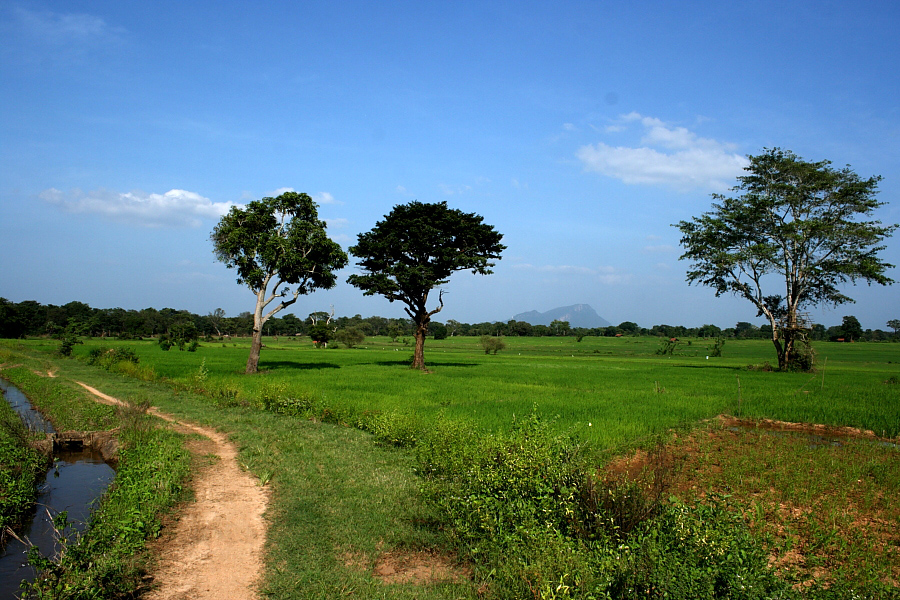
Lush paddy fields of Yakkure with Dimbulagala in the backdrop

The mountain seen over the paddy fields to the east of us was the well known Dimbulagala. Rising above the flat terrain and glittering under the afternoon sun, it resembled the cultural and religious heritage of the area we were walking in. The lush green of the paddy, after the recent rains, was pleasant to the eyes. Beyond the line of vegetation should be the Handapan Villu, an important wetland. One of the schoolteachers who accompanied us pointed at a few tamarind trees on our path and scattered among paddy fields. Tamarind trees are signs of human habitation and this reminded me of a statement in Dr R L Spittel’s Wild Ceylon, “… itself was a negligently palisaded hamlet nestling in a grove of tamarinds, in full view of a beautiful Wewa” These could be the same trees.

We were walking towards Yakkure, or the old abandoned Yakkure village, known to some interesting Sri Lankans. Yakkure is a small village situated in Dimbulagala DS Division in the Polonnaruwa District. On the map, this village is situated within a distance of a little over ten kilometers from Polonnaruwa on the other side of Mahaweli. However one has to take an encircling route travelling along the Manampitiya-Dimbulagala-Siripura Road that is about four times longer than that, to reach the village. It is situated in close proximity to the Mahaweli River, actually within and close to the flood plain.

Yakkure is mentioned occasionally in history, both ancient and modern. The wilderness of the area, the remoteness of the village and the connection to the Veddas is well-known and even reproduced in modern writings. However, during a brief visit organized by Friends of Heritage to Ihala Yakkure School to donate some library books, I had the opportunity to observe the transformation that has taken place there. The village has been transformed much during the last century, but more rapidly during the last two to three decades. 


Yakkure in the past


There are many landmarks in Yakkure mentioned in historical records. For instance, Dhumarakkha Pabbata was first mentioned as the adobe of prince Pandukhabhaya, during the time of his campaign against his uncles. That was the name of Dimbulagala in 4th Century BCE and it was known as Gunner’s Quoin during the colonial times. The mountain and the surrounding area have a large number of ancient Buddhist religious sites – evidence for the civilization that flourished in the area. The plain is dotted with a vast number of Wewas or tank systems that once irrigated the paddy fields, is evidence of the extent of the hydraulic civilization.

Situated on the right bank of Mahaweli, Yakkure belonged to ancient Rohana Desa and the area between Mahaweli and Maduru Oya was known as Antara Ganga in ancient times. Yakkure is situated on the ancient road from Polonnaruwa to Mahiyangana. A person who crosses Mahaweli Ganga at Dastota, an ancient ford to the southeast of Polonnaruwa and enters Yakkure village can proceed along the road to Mahiyangana. The footpath from Yakkure to Mahiyangana is marked on one-inch maps - Yakkure, Kalukele Ebe, Hinguruattawila, Polattawila, Ellekotaliya and Nikagollewa, mostly along the right bank of Mahaweli. However, this path becomes inaccessible during the rainy period as the area close to the river is inundated. Narration by an old villager describing a journey by a group of state officials including D.S. Senanayaka probably during the pre-independent period is published in the book titled Antara Ganga.

The name Yakkure is found in our chronicles and was identified by HW Codrington – It was Yakkhasukarathitta in Pali, which is mentioned in Mahavamsa. An official named Kitti was stationed during the struggles for power in the 12th Century. The Sinhalese rendering of the name is Yakuratota, which has survived up to present. On the other side of the Mahaweli Ganga was Sahassatittha, or present Dastota, which is also found in a variety of sources. This is also known as Kandavurdahastota in one of the kadaimpoth, the books on the boundary divisions of Sri Lanka. According to Mahavamsa, an Upasampada or a higher ordination ceremony took place at this place – the location mentioned is the island on the Mahaweli Ganga.

The dried-up canal that runs at the northern edge of the paddy fields of the present Ihala Yakkure village has been identified as the Kalinga Yodi Ela, an ancient irrigation marvel built centuries ago. The canal originates close to the island known as Kalinga Dupata or Kalinga Nuwara ruins on Mahaweli and once ran towards the east, with some distance to the right bank of Mahaweli, providing water for agriculture. According to R L Broheir, this canal runs along the contour and was traced up to a distance of 21 miles – it went passed Yakkure, went around Handapan and Bendiya Villus and crossed Horivila area to reach the plains north of Dimbulagala Rock. He also agrees with the fact mentioned by the people about the original length of the canal - it ran further to the east.


Dried-up ancient canal

Village Veddas


However, that was the ancient past. After the kingdom was shifted to the wet zone with the fall of Polonnaruwa, the area around was neglected. The massive irrigation systems were abandoned without any maintenance, vast paddy fields were left fallowed and spread of diseases did the rest. The population decreased rapidly and sometimes replaced by migrants from other areas, who were able to survive on basic forms of subsistence such as Chena cultivation, cattle herding and hunting.

After some centuries, Yakkure is again mentioned as a village regarding Vedda people. In their monumental publication The Veddas, Seligmans categorized Yakkure Veddas as village Veddas. According to them, the Veddas of Yakkure lived in well-built huts in a compact settlement which might almost be called a town. They had large herds of cattle and Chena cultivation. Writing further, they said that “…although they call themselves Veddas, though physically they would pass as Tamils or mixed Tamils or Sinhalese and show even less evidence of Vedda blood than the Kalukala Eba people (a village close to Yakkure). They knew their Waruge and invoke the Nae Yaku, but they had a temple, and worship a number of Sinhalese Gods.” – there is a list of some such Sinhala gods like Mangara Deviyo, who is invoked to protect cattle. Seligmans also mention that Yakkure people had a Sinhalese headman.

It is evident that the Seligmans came across a community of Veddas who were already under transition. This is further supported by few statements by some later writers. In describing one of his hunting trips via Yakkure in 1915s, Harry Storey mentioned that the village “is or originally was a Vedda settlement and a fair number of the inhabitants are of Vedda descent but there is now a considerable admixture of aliens from other parts of the country.”

How many Veddas were living in the village? Census reports can provide a clue about the situation. The total population of Yakkure in 1891 was 105, comprising of 24 families and it increased to 145 by 1911. The population of the village declined to 121 by 1921, with 112 Vedda inhabitants. However, it is of interest to note that 120 of these people are recorded as Buddhists in the 1921 census. Yakkure was the village with the highest number of Vedda people in the entire North Central Province. However, we cannot rule out the inaccuracy of classifying of Vedda people in these censuses, which is also a fact mentioned in the censuses themselves.

Some have argued that the influence of Ven. Kitalagama Silalankara Thera, former Chief Incumbent of the Dimbulagala Temple had an impact on the change of Veddas. The monk, settled the Veddas in the whole area around Dimbulagala, in villages, including Yakkure. These people may have already been transformed by the time of Ven Silalankara Thera.

Struggling with nature


The people living in Yakkure and surrounding areas constantly struggled with nature, because of the topography, frequent floods and wild animals. Some of the terrains was low lying and were subject to annual floods with massive, devastating floods occurring from time to time. Dr. R L Spittel in his Wild Ceylon mentions that “once in a decade the waters creep up and submerge the huts, sending the people up trees and their cattle into the forest to be drowned or killed by leopards.” Yakkure people might have had to restart their lives again and again since time immemorial.

The other issue people had was the struggle with animals, mainly the elephants. The flood plains of the Mahaweli creates a unique ecosystem – the Villus. These Villus are periodically flooded from the river and drain back into it naturally. This ecosystem can harbour a number of plant and animal species. Villus are also known to be a habitat preferred by elephants, whom humans have had an age-old conflict with. In fact, it was the elephants' own territory.

Yakkure and the surrounding area was a habitat preferred by these elephants and hence a sought-after hunting ground for the hunters. Storey and Dr Spittel both mention the death of a hunter named Chase Wiggins in 1918, who was killed by a rogue elephant, which he was hunting in Yakkure. He was the superintendent of Minor Roads of the North Central Province, and the Government Agent laments about his death praising his services in killing elephants and mentions that it was a great loss to the province. Wiggins was hunting his 37th elephant and we cannot judge how many were saved thereafter! But we speak about a time where wildlife and conservation had different values.

The flood plains of Mahaweli in this area suffered seriously form human activities for a long period – cattle grazing, tobacco cultivation, sand removal had a detrimental effect on this ecosystem. Thilo W Hoffman mentioned that this caused serious damage to the gallery forest, or the riverine forests of the area. To resolve the situation, a Flood Plains National Park encompassing the series of Villus on both sides of the river was declared in 1984. This was a vital step forward for environmental conservation in the area; an important ecosystem is protected, thereby providing an adobe for wildlife. However that doesn’t mean everything is fine in this National Park, threats persist.

Present Yakkure


The old Yakkure village, the sole settlement within the National Park, was closed down as it was lying within the Flood Plains National Park. The villagers were settled in a Mahaweli Village in System C. According to our friends there they were settled in Pahala Yakkure Village, further south. The present village close to the old village is Ihala Yakkure and it is entirely a new settlement, where settlers hail from Badulla, Kandy and Ratnapura districts.

A villager showed us the old school building, a remnant of the old village on the other side of the electric fence – probably the border of the national park. The fence is in place to protect crops from elephants that encroach the paddy fields. There was an old well now abandoned in the middle of paddy lands and there was a mound, which we were told, was the remnants of a bunker built during the time of war. The old Yakkure Wewa, which is now abandoned is situated close by. According to the villagers, fishing activities are still allowed in the Wewa.


Ruins of the old village

We observed that some of the villagers were building huts to protect their paddy cultivation from the unwelcome guests – the elephants, whom they expect when the crop ripens. The paddy land is larger than the paddy fields marked in old maps, and it seems that the area was bulldozed to create these paddy fields. A villager pointed out the location where there was a Wewa before the paddy lands were created – it is marked on one-inch map as Alut Wewa.

The change that has taken place in this area is drastic. The details of the landscape of the one-inch maps, as well as the metric maps made before 1990s, have been changed immensely after the implementation of Mahaweli Development Project. The canal system providing Mahaweli water is the key water source and many of the Wewas in the area seem to be neglected and many seem to receive water from the rainfall-runoff only. There is a good road network in the area, but public transport facilities may not be frequent in branch roads. We saw a notice about the stoppage of bus service due to the dilapidated state of roads, but the state of some of the road was better than some main roads in Colombo and Gampaha Districts.


The people have been provided with land, both paddy and high ground. Agriculture is the main income of the people at present, with paddy as the major crop and vegetables cultivated in the high ground as a subsidiary. A villager who spoke to us said that if they can work hard, it is not difficult to survive in this area. However, the land issue could rise again in the future with the next generations needing more and more land.

It seems they have also diversified their income by opting for alternative income sources. One such method is the culture of ornamental fish on the paddy fields. Youth seems to be interested in finding other livelihood options too. Many have built their own homes, according to their own requirements and based on their own capabilities. Electricity from the main grid is provided to villagers and some even use solar power for purposes, such as water pumping. The schools in the area had been built in 1980s and 1990s under the Mahaweli scheme and seem sufficient for the population, but facilities are required to improve the quality of education.

I am inclined to think that Yakkure of our old writers is no more, except for a few of the remnants. It is an abandoned village and the villages that bear its name are recent establishments, although one village is home for old Yakkure people. That was a result of continuous transformation accelerated by the Mahaweli Development Project. It is interesting to note that the village is still being transformed, which is natural. However, memories and cultural aspects of these old villagers are worth academic research, before being wiped away by the tides of time.

Pics: Bushana Kalhara


Monday, January 7, 2013

Environment needs protection while promoting Tourism

Dhanesh Wisumperuma

The Nation, 06-01-2013, Gain, p.9
http://www.nation.lk/edition/business-tbl/item/14284-environment-needs-protection-while-promoting-tourism.html


The one millionth tourist to visit Sri Lanka during 2012 arrived on December 30. As shown by the reception received by this Chinese tourist and the 1,000,001st tourist, it seems to be a milestone of the tourism industry. Actually, the arrival of one millionth marked the hitherto highest number of tourist arrivals in a single year. According to the Sri Lanka Tourism Development Authority, the number of tourist arrivals was 855,977 in 2011, which was about one and half times than the then so far highest number, 566,200 recorded in 2004.

Sri Lanka has been a popular tourist destination since the ancient past mainly due to the attractions and the location of the island. There was a marked increase in the number of tourists in 1980s, but it got reversed due to the conflict in the North and East of the country and the numbers fluctuated depending on the peaceful nature of the country. For instance 2002-2006 period saw a rapid rise of tourist arrivals, and the so far highest number of tourists was recorded in 2004, which record was only overtaken in 2010. Since the end of the conflict in 2009, Sri Lanka was named as an outstanding tourist destination by international media such as the New York Times and since then tourism industry has seen a boom. This source of revenue grabbed the attention of authorities and the expected target of tourists changed with the growing state of the industry. For instance, Mahinda Chintana (2005) stated the target as 2 million tourists for 2016 and this expected figure was later revised to 2.5 million.

At present tourism is considered as a source of income for the country. Tourism has been identified as a sector that has the potential to become a key source of foreign exchange earnings. It is a fast growing sector of the country and the authorities as well as the entrepreneurs are interested in the industry. A large number of resorts and hotels are being built around the country and a number of tourist hotels have been repaired, refurbished or under planning stage at present. Majority of the existing resorts are located in the coastal zone, which is estimated as 70% of the registered hotels. This shows that the attention is for the mass tourism, which caters the visitors who come for leisure and sun, sea and sand.

The development of the tourism sector has an impact on other sectors, such as the transport and construction sectors. It could be a contributor for the development of the country and economy, but there are certain negative impacts of it, which are widely discussed in the country for the last three decades. These include the impact on the environment as well as the society. It has been accepted that this impact should be minimized to make tourism a contributor for sustainable development.

The environmental impact

Tourism has an impact on the environment and this needs due consideration of the authorities as pointed in the Central Bank’s Annual Report of 2011. This fact has been pointed almost for the last three decades, and highest at present but seems to be still neglected by the authorities.
One such issue so far neglected is the situation caused by over visitation in some of the protected areas. Visitation of large number of groups throughout the day time could hinder the normal behavior of animals and cause distress among them. Research has shown that this is also a growing issue in our protected areas such as Ruhuna National Park. This seems to be increased during the season. Also, some species such as crocodiles are in a threat in some areas where tourism is thriving.

The increased number of tourists has even forced the authorities to implement certain action which are illegal according to the law. The best example for this is the operation of campsites within the national parks by private sector agencies, which was recently stopped with the intervention of the President, after the continuous protest by the environmental activists.

Similarly incidents of biotheft have increased recently, where tourists (or bio-thieves in tourist attire) were engaging in this illegal act. Collection of rare and endemic species of animals and plants has been recorded from various areas of the country, even with the support of locals. In addition, road kills has been increased in and around many protected areas, which could be linked to tourism activities. The threat of invasive species could also become serious with the increased tourism.

The negative impact of tourism is seen in both local as well as foreign tourism. Some such impacts of over visitation are more common in sites frequented by local tourists. Environmental pollution is one such serious problem, which is worsened by the lack of proper waste management by some of the local authorities.


Infrastructure and environment

The intensive tourism development around the country has caused a serious impact on some of the natural resources. Some hotels and resorts were developed causing threats to some of the threatened ecosystems. Due to the scenic beauty and as a method of obtaining ‘eco’ label, some of the pristine environments are attracted by tourism industry. This can even cause encroachment of protected areas as well and increase the environmental impacts mentioned above. Such informal constructions could also be seen even in the coastal zone. According to a research paper published in 2009, tourism development in Bentota and Hikkaduwa areas has not been carried out according to principles of sustainable tourism development. A number of important ecosystems in the country are under the threat of hotels and some of these receive the support of the state authorities, considering the benefit to tourism sector only. But in such projects the environmental impact should be considered important.

Development of tourism and catering the increasing demand needs further infrastructure like hotels, guesthouses and transport facilities as well as more resources like water, electricity etc. This can affect the protected areas as well as the general environment. The recent efforts to construct roads in and around some protected areas seem to be an act intended to open those areas for tourism, without considering the sustainability. The demand for granite, sand and earth has increased partly due to the new constructions as well as other infrastructure. Unplanned extraction of these resources could lead towards local problems which could affect the people and the environment.

A classic example about this is what we need to provide transport - airports or highways. The country has a number of airports in use since the British occupation of the country. Some of these are at present used as domestic airports. These could cater to the needs of the smaller planes suitable for internal flights and rest could be handled by the road transport. The second international airport at Mattala is also being built and nearing completion. In such a scenario, the plan to construct airports in Kandy using the lands belonging to the farm and in Nuwara Eliya caused opposition among the people. The government’s decision to abandon these proposals was welcome news. We wish that the decision will stand on.


The country needs to identify priorities first. For instance, the main objective of wewas or the tank system which is an important part of our history was should be to provide water for paddy fields. Using those as a landing water body for sea planes should be done if necessary, but without hindering that main use, which directly produces what people consume. Small aero planes which could be landed in existing small airports can be used instead of the seaplanes.

‘Sustainable Tourism’

The need of the day is to promote sustainable tourism. It should not be another tag used to promote the mass tourism, but must mean sustainability genuinely. Such a tourism development will preserve environment as well as obtain the best benefit from the industry. Making the tourism industry sustainable is not just making the hotel industry sustainable with introducing eco-friendly measures. Sustainable tourism development has to have environmental balance as well as it should increase the wellbeing of the local people and it includes all types of tourism including mass tourism. (for more on sustainable tourism, visit www.unep.fr/scp/tourism/sustain)

To achieve the sustainability, ecotourism could be prioritized than the mass tourism which is the leading sector at present. Further, it should be the real ecotourism and not a new face of mass tourism just labeled as eco. In Sri Lanka, environmental friendly tourism and environmental friendly tourists are often pointed as ecotourism. But ecotourism is connected to the object of the visit and not the environmental friendly nature of the hotel industry. For instance, resorts built close to a forest or other natural environment is labeled as ecotourism ventures, while it continues to cater the conventional mass tourism industry.

But, in ecotourism, the benefit should go to the people and the local community, and not to a few outsiders or companies. Its environmental impact will be lower while it brings more foreign exchange earnings. Promotion of ecotourism is among the policy priorities in certain authorities. The National Action Plan for Haritha Lanka Program, published in 2009, has a target to increase ecotourism by 30% between 2009 and 2016. It seems the current trend is nowhere near this.

The cultural and religious tourism industry has not yet grabbed the attention of the industry yet. Although country’s heritage cities are in the list of tourist attractions, but it is not at the optimum level. As a country with a rich Buddhist heritage, Sri Lanka has the potential to attract more visitors from other Buddhist nations. Sri Lanka’s Buddhist heritage is connected with the history of the country.

Unfortunately, what we can see on the ground is not the best we can expect. The country seems just promoting mass tourism, and it is time to make a shift of the policies towards sustainable tourism to obtain the best from this industry. Sri Lanka can provide an example for green economy through such a way only. An extensive discussion and action are required on this.

http://www.nation.lk/edition/business-tbl/item/14284-environment-needs-protection-while-promoting-tourism.html

Wednesday, November 21, 2012

විද්‍යාඥයන් හඹා යන්නේ පර්යේෂණ ප්‍රතිපාදන ද?

විද්‍යාඥයන් ගේ ගෝලීය සංක්‍රමණ රටාව

ධනේෂ් විසුම්පෙරුම

විදුසර (Vidusara), 2012-11-14, පි. 5
http://www.vidusara.com/2012/11/14/feature5.html

උගතුන් හා විද්‍යාඥයන් තමන් උපන් රට අතහැර යැම බොහෝ රටවල, විවිධ අංශවල ගැටලු ඇති කර තිබෙන කරුණකි. මේ සමග සිදු වන බුද්ධිගලනය හේතුවෙන් විශේෂයෙන් දියුණු වන රටවලට බලවත් පාඩුවක්‌ සිදු වේ. ඒ තත්ත්වයට බලපා ඇති කරුණු පිළිබඳව ද, එහි ප්‍රතිඵල පිළිබඳව ද බොහෝ දේ සාකච්ඡාවට ලක්‌ ව ඇත. එහෙත් දිනෙන් දින දැකිය හැක්‌කේ සංක්‍රමණ ඉහළ යන බව හා බුද්ධිගලනය වර්ධනය වන ආකාරයකි.

මේ පිළිබඳව මෑත දී අනාවරණය වී ඇති ප්‍රවණතා කිහිපයක්‌ පිළිබඳව මේ ලිපියේ දී සාකච්ඡා කිරීමට අපේක්‌ෂා කරමු. මේ සඳහා මෑත කාලයේ දී Nature හා Science සගරාවල පළ වූ ලිපි දෙකක්‌ පාදක කරගෙන ඇත.

විද්‍යාඥයන් ගේ සංක්‍රමණ රටාව

ඉන් එක්‌ ලිපියක්‌ පසුගිය ඔක්‌තෝබර් මාසයේ Nature සගරාවේ පළ විය. (DOI:10.1038/490326a). එහි දී අවධානය යොමු කර ඇත්තේ විද්‍යාඥයන් ගේ ගෝලීය සංක්‍රමණයේ හඳුනාගත හැකි රටාව කෙබඳු ද යන්න, ඔවුන් මේ ආකාරයෙන් තමන් උපන් රට අත්හැර යැමට බලපාන සාධක මොනවා ද යන්න හා ඒවා වෙනස්‌ විය හැකි ආකාරය හඳුනාගැනීමයි. මේ සඳහා ඉදිරියේ දී පළ වීමට ඇති පු`ඵල් අධ්‍යයනයක දත්ත හා ස`ගරාව විසින් සිදු කරන ලද සමීක්‌ෂණයක තොරතුරු හා ප්‍රකාශයට පත් ව ඇති අධ්‍යයන ද යොදාගෙන තිබේ. මේ ඉදිරියේ දී ප්‍රකාශයට පත් වීමට නියමිත GlobSci නම් ව්‍යාපෘතිය වැදගත් වන්නේ එය විද්‍යාවේ ප්‍රධාන අංශ හතරක විද්‍යාඥයන් 17,000ක්‌ පමණ පිරිසක්‌ යොදාගනිමින් සිදු කරන ලද අධ්‍යයනයක්‌ බැවිනි. කෙසේ වෙතත් ඊට චීනය ඇතුළත් නො වන බව සැලකිය යුතු ය.

මෙහි දී හෙළි වී ඇති ආකාරයට වැඩි ම විද්‍යාඥයන් ප්‍රමාණයක්‌ විදේශගත වී ඇත්තේ අපේ අසල්වැසි ඉන්දියාවෙනි. එරට බිහි වී ඇති විද්‍යාඥයන් අතරින් 40%ක්‌ පමණ මේ වන විට වෙනත් රටවල වාසය කරති. මේ අතරින් 75%ක ගේ පමණ ගමනාත්නය වන්නේ ඇමෙරිකාවයි. මේ තත්ත්වය දියුණු වන රටවල පමණක්‌ නො ව දියුණු රටවල ද දැකිය හැකි ය. යුරෝපා රටවල සිට වෙනත් රටවලට සංක්‍රමණය වන විද්‍යාඥයන් ගේ ප්‍රමාණය ද සැලකිය යුතු තරම් වීම මීට නිදසුනකි. බ්‍රිතාන්‍යයේ සිට වෙනත් රටවලට සංක්‍රමණය වන විද්‍යාඥයන් අතරින් 80%ක්‌ තෝරා ගන්නේ ඔස්‌ටේ්‍රලියාව, කැනඩාව හා ඇමෙරිකාව වැනි දියුණු රටවල් ය. කෙසේ වෙතත් සංඛ්‍යාත්මකව ගත හොත් සංක්‍රමණික විද්‍යාඥයන් අතරින් වැඩි ම පිරිසක ගේ ගමනාන්තය වන්නේ ඇමෙරිකාව වේ.

එහෙත් යම් රටක සිටින විද්‍යාඥයන් අතරින් විදේශීය විද්‍යාඥයන් ගේ ප්‍රතිශතය ඉහළ ම රට වන්නේ ස්‌විට්‌සර්ලන්තයයි. එරට සිටින විද්‍යාඥයන් අතරින් 57%ක්‌ විදේශිකයන් ය. කැනඩාවේ මේ ප්‍රමාණය 47%කි. කෙසේ වෙතත් මේ රටවලට පැමිණෙන විද්‍යාඥයන් අතර යම් වෙනස්‌කමක්‌ තිබේ. ස්‌විට්‌සර්ලන්තයේ සිටින විද්‍යාඥයන් අතරින් වැඩි ම පිරිසක්‌ (37%) ජර්මනියෙන් පැමිණ ඇති බව පෙනේ. කැනඩාවට පැමිණන පිරිස්‌ අතරින් ඉදිරියෙන් සිටින්නේ බ්‍රිතාන්‍ය හා ඇමෙරිකානු විද්‍යාඥයන් ය. ඒ සියයට 14 බැගිනි. ඇමෙරිකාවේ සිටින විදේශීය විද්‍යාඥයන් ගේ ප්‍රමාණය 38%ක්‌ පමණ වන අතර ඒ අතරින් 17%ක්‌ වන වැඩි ම පිරිස පැමිණ ඇත්තේ චීනයෙනි. දෙවැනි තැන ගන්නා ඉන්දියානුවන් ප්‍රමාණය 12%කි. මීට සාපේක්‌ෂව දියුණු වන රටවල සිටින විදේශීය විද්‍යාඥයන් ප්‍රමාණය ඉතා අඩු ය. නිදසුනක්‌ ලෙස ගත හොත් බ්‍රසීලයේ සිටින විදේශීය විද්‍යාඥයන් ප්‍රමාණය 7%ක්‌ වන අතර ඉන්දියාවේ 1%කි.

සංක්‍රමණ සඳහා බලපාන සාධක

මේ ආකාරයෙන් වෙනත් රටවලට සංක්‍රමණය වීම සඳහා බලපාන ප්‍රධාන සාධක ලෙස හඳුනාගත හැකි කරුණු කිහිපයක්‌ තිබේ. ඒවා අතර නව රටේ ජීවන තත්ත්වය උසස්‌ වීම, පර්යේෂණ සඳහා ඇති ප්‍රතිපාදන ඉහළ මට්‌ටමක තිබීම හා ඉහළ වැටුප් මට්‌ටම මුල් තැනක්‌ ගනියි. තම සංක්‍රමණ තීරණ සඳහා මේවා බලපාන බවට පිළිවෙළින් 88%ක්‌, 84%ක්‌ හා 77%ක්‌ අදහස්‌ දක්‌වා තිබිණි. කෙසේ වෙතත් රටක්‌ පොහොසත් වූ පමණින් ම විදේශීය විද්‍යාඥයන් ඒ රටට නො පැමිණෙන බව උක්‌ත ලිපියේ දක්‌වා ඇත. ඊට හේතුව වන්නේ, ඒ රටවල ඇති දැඩි නීති පද්ධති හා රැකියා සොයාගැනීමට ඇති අපහසුව වැනි කරුණු ය. ජපානය හා ඉතාලියේ විදේශීය විද්‍යාඥයන් සිටින ප්‍රමාණය අඩු වීමට ඉහත කී කරුණු බලපා ඇති බව සැලකේ. අනෙක්‌ අතට අදාළ රටේ සංස්‌කෘතියට එක්‌ වීම අපහසු වීම ද මෙවැනි රටවලට ගිය විද්‍යාඥයන්ට බලපා ඇති බවක්‌ පෙනේ. ජපානය මීට නිදසුනක්‌ සේ දක්‌වා ඇත.

සංක්‍රමණ අධ්‍යයන සිදු කිරීමේ දී දැකිය හැකි ගැටලු පිළිබඳව ද අප ඉහත සඳහන් කළ අධ්‍යයනයේ දී අවධානය යොමු කර තිබේ. විශේෂයෙන් විද්‍යාඥයන් ගේ සංක්‍රමණ අධ්‍යයනයේ දී එක්‌ එක්‌ රටවල් වාර්තා තබා ගන්නා ක්‍රමයේ වෙනස්‌කම් ඇති අතර සංක්‍රමණ හඳුනාගැනීමේ ද ගැටලු පවතී. මේ හේතුව නිසා ද විද්‍යාඥයන් ගේ සංක්‍රමණ පිළිබඳව සිදු කර ඇති අධ්‍යයන ද අඩු ය.

අනාගත ආකර්ෂණය ආසියාව ද?

විද්‍යාඥයන් වැඩි වශයෙන් සංක්‍රමණය වන්නේ ඇමෙරිකාව, යුරෝපය වැනි රටවලට ය. එහෙත් අනාගතයේ දී මේ තත්ත්වය වෙනස්‌ විය හැකි බවට අදහස්‌ පළ වී තිබේ. පසුගිය සැප්තැම්බර් මාසයේ දී Sජසැබජැ ස`ගරාවේ පළ වූ පුවතකට අනුව, මෙතෙක්‌ කාලයක්‌ ඇමෙරිකාව හා වෙනත් රටවලට පැමිණි පර්යේෂකයන් හා විද්‍යාඥයන් අනාගතයේ දී ආසියානු රටවලට පැමිණීමේ ප්‍රවණතාවක්‌ දැකිය හැකි වනු ඇත. (DOI: 10.1126/ science.337.6099.1162). ආසියාවේ ප්‍රකට විශ්වවිද්‍යාලවල හා පර්යේෂණායතනවලට මේ වන විටත් ලෝකයේ සෙසු රටවලින් විශිෂ්ට ගණයේ විද්‍යාඥයන් ආකර්ෂණය කර ගැනීමට හැකියාව ඇති බව පෙනේ.

හොංකොං, සිංගප්පූරුව හා නැෙ`ගනහිර ආසියාවේ වෙනත් රටවල් කිහිපයක්‌ මෙසේ විදේශිකයන් ආකර්ෂණය වන රටවල් අතර වේ. කලාපයේ වඩා හොඳ විශ්වවිද්‍යාල ද මේ රටවල පිහිටා ඇති අතර ඒ, එම රටවල ඉහළ වැටුපක්‌ ගෙවීම හා වෙනත් පහසුකම් නිසා ය. නිදසුනක්‌ ලෙස සිංගප්පූරු ජාතික විශ්වවිද්‍යාලයයේ ක්‌වොන්ටම් තාක්‌ෂණය පිළිබඳ මධ්‍යස්‌ථානය (Centre for Quantum Technologies) සේවය කරන විද්‍යාඥයන් 150ක්‌ දෙනා රටවල් 33කින් පැමිණි අය වෙති. මේ තත්ත්වය දෙවැනි ලෝක යුද්ධයෙන් පසුව ගෙවී ගිය කාලයේ දී ඇමෙරිකානු විශ්වවිද්‍යාලවල පැවැති විවිධත්වයට සමාන වේ.

ඇතැම් විශ්වවිද්‍යාල හා පර්යේෂණායතන ප්‍රතිපත්තියක්‌ ලෙස ලෝකයේ විවිධ රටවලින් විද්‍යාඥයන් බඳවාගැනීම පිළිගෙන තිබේ. සාමාන්‍යයෙන් විදේශීය විද්‍යාඥයන් අඩු ජපානයේ ඇතැම් ආයතන මෙවැනි තීරණයක්‌ ගෙන ඇත. චීනයත් එවැනි පියවරක්‌ ගෙන ඇති බවක්‌ පෙනේ. කොරියාවේ ආයතනවලට ද රජයේ සහයෝගය ද ලැබෙන බව පෙනේ.

කෙසේ වෙතත් විදේශීය විද්‍යාඥයන් ආකර්ෂණය කිරීමේ ලා ඉදිරියෙන් ම සිටින්නේ හොංකොං හා සිංගප්පූරුවේ පිහිටි විශ්වවිද්‍යාල හා පර්යේෂණායතන ය. සිංගප්පූරු ජාතික විශ්වවිද්‍යාලයයේ සAථිර සේවයේ නියුතු ව සිටින විද්‍යාඥයන් හා පර්යේෂකයන් අතරින් 50%කට අධික පිරිසක්‌ විදේශිකයෝ වෙති. ඔවුහු රටවල් 70කට පමණ අයත් වෙති. හොංකොං විශ්වවිද්‍යාලයයේ මේ ප්‍රමාණය 40% ඉක්‌මවන අතර ඉන් සැලකිය යුතු පිරිසක්‌ චීනයෙන් පැමිණ තිබේ. හොංකොං හා සිංගප්පූරුවේ මේ සඳහා ඇති ප්‍රධාන වාසියක්‌ වන්නේ ඔවුන් ඉංග්‍රීසි භාෂාව භාවිත කිරීමයි. එසේ ම හොංකොං හා සිංගප්පූරුව යනු බෙහෙවින් ජාත්‍යන්තර තත්ත්වයේ ඇති රටවල් වන නිසා ඒවා බටහිර රටවල වැසියන්ට ජීවත් වීම සඳහා බොහෝ සේ ගැළපෙන රටවල් සේ සැලකේ. අනෙක්‌ අතට ජාත්‍යන්තර සන්නිවේදනය පු`ඵල්ව ඇති නිසා එය ලෝකය සමග ඇති සම්බන්ධතා සීමා වීම වළක්‌වාලීමට හේතු වී තිබේ.

අනෙක්‌ අතට මේ ආයතන පිහිටා ඇති ප්‍රදේශය හා එහි ජනගහනය සීමාසහිත වන බැවින් වෙනත් ප්‍රදේශවලින් විද්‍යාඥයන් සේවයට එක්‌ කර ගැනීම කළ යුතු ම කරුණකි. නො එසේ නම් උක්‌ත ආයතනවලට ඒවායේ විශිෂ්ටත්වය පවත්වාගැනීම අපහසු වීමට ඉඩ තිබේ.

මේ ආකාරයෙන් ආසියානු විශ්ව විද්‍යාලවලට වෙනත් රටවලින් විදේශිකයන් ආකර්ෂණය වීම සඳහා බලපා ඇති තවත් වැදගත් හේතුවක්‌ තිබේ. යුරෝපයේ හා බටහිර කලාපයේ රටවල මෑත කාලයේ දී ඇති වී තිබෙන ආර්ථික අර්බුදය හා පසුබෑම ඒ හේතුවයි. ඇතැම් ආයතනවල පර්යේෂණ සීමා කිරීමට ද, තවත් ආයතනවල ස්‌ථිර සේවකයන් ගේ සංඛ්‍යාව කප්පාදු කිරීමට ද මේ තත්ත්වය හේතු වී ඇත. එහෙත් පෙර සඳහන් කරන ලද ආසියානු රටවල විද්‍යාඥයන් හා පර්යේෂකයන් සඳහා වන ගෙවීම් ඉහළ මට්‌ටමක පවතී. ඒවා බටහිර රටවල ගෙවීම් හා සමාන වේ. එසේ ම ඇතැම් සුවිශේෂ පර්යේෂණ විෂයධාරා පැවතීම ද මේ රටවලට විද්‍යාඥයන් ආකර්ෂණීය වීම සඳහා බලපා තිබේ.

බුද්ධිගලනයෙන් පාඩු නො වීමට නම්,

බුද්ධිගලනය විද්‍යා අංශයෙන් ඉදිරියට යැමට අපේක්‌ෂා කරන රටවලට ගැටලුවක්‌ වන බව ඉතා පැහැදිලි ය. සන්නිවේදනය හා ප්‍රවාහනය අතින් වඩා සමීප ව ඇති ලෝකයක දී එක්‌ රටක වාසය කරමින් රටවල් කිහිපයක ආයතන සමග කටයුතු කිරීමක්‌ පිළිබඳව අපේක්‌ෂා කළ හැකි වුවත් එවැනි තත්ත්වයක පසු වන විද්‍යාඥයන් සිටින්නේ අඩු වශයෙනි. මේ නිසා තවමත් අපේ ලෝකය තුළ බුද්ධිගලනය සත්‍ය සිදුවීමක්‌ වන අතර ඉන් මේ උගතුන් උපන් රටට බොහෝ විට සිදු වන්නේ පාඩුවකි.

මේ තත්ත්වයේ බරපතළ බව පෙන්වා දුන් අධ්‍යයනයක්‌ 2010 වර්ෂයේ දී පළ වී තිබේ. ඒ අනුව 1981-2003 අතර කාලයේ දී ලෝකයේ වඩාත් ම උපුටා දක්‌වන ලද (most highly cited) විද්‍යාඥයන් අට දෙනකු ගෙන් එක්‌ අයකු ඉපිද ඇත්තේ දියුණු වන රටක ය. එහෙත් ඒ අතරින් 80%ක්‌ දෙනා පසු කලක දියුණු රටක්‌ වෙත සංක්‍රමණය වී ඇත. මේ නිසා ලෝකයේ බොහෝ රටවලට මුහුණ දීමට සිදු වන්නේ කිසියම් ආකාරයක පසුබෑමකට ය. විද්‍යාවේ ඉදිරි ගමන සඳහා මේ සංක්‍රමණ දායක වුවත් ඒ නිසා දියුණු වන රටවල් කිසියම් පසුබෑමකට ලක්‌ වන බව පැහැදිලි ය.

පෙර සඳහන් Nature අධ්‍යයනයේ දැක්‌වෙන ආකාරයට සංක්‍රමණය සඳහා වැඩි නැඹුරුතාවක්‌ දක්‌වන්නේ විදේශයක දී තම ආචාර්ය උපාධිය අවසන් කළ ආසන්නයේ ම පසු වන පිරිස්‌ ය. ඔවුන් ගෙන් 61%ක්‌ පමණ ආපසු තම මවුබිමට නො යැමට ඉඩ තිබේ. අධ්‍යයනයට ලක්‌ වූ සැම රටක ම තත්ත්වය එබ`දු ය. ජ්‍යෙෂ්ඨ විද්‍යාඥයන් සංක්‍රමණය සඳහා දක්‌වන නැඹුරුතාව අඩු ය. මේ නිසා තම රටවල බුද්ධිගලනය වැළැක්‌වීමට හා විදේශගත විද්‍යාඥයන් නැවත ගෙන්වා ගැනීම සඳහා යම් රටක්‌ උනන්දු වන්නේ නම් ඔවුන් ඊට ඉලක්‌ක කරගත යුත්තේ මේ තරුණ පිරිසයි.

Nature සගරාවේ පළ වූ ලිපියේ දැක්‌වෙන එක්‌ කරුණකට අනුව සංස්‌කෘතික සාධක නිසා විද්‍යාඥයන් ගේ සංක්‍රමණවල රටාව කෙරේ යම් බලපෑමක්‌ ඇති කළ හැකි ය. ඒ අනුව සංස්‌කෘතිකමය කරුණු නිසා සංක්‍රමණවල යම් සීමා වීමක්‌ ඇති විය හැකි ය. නිදසුනක්‌ ලෙස ගත හොත් ජපානයේ සංස්‌කෘතියට එක්‌ වීමට නොහැකි වීම බටහිර වැසියන් එවැනි රටකට පැමිණීමට බලපාන බව දක්‌වා තිබේ. එයින් ගම්‍ය වන තවත් කරුණක්‌ තිබේ. එනම්, තමන් උපන් රටේ සංස්‌කෘතියට ඇති බද්ධ වීම උගතුන් රට හැර යැම වළක්‌වා ගැනීමට යොදා ගත හැකි බව ය. මෙය බුද්ධිගලනය වළක්‌වා ලීමට යොදාගත හැකි මෙවලමක්‌ බව පැහැදිලි ය.

http://www.vidusara.com/2012/11/14/feature5.html